




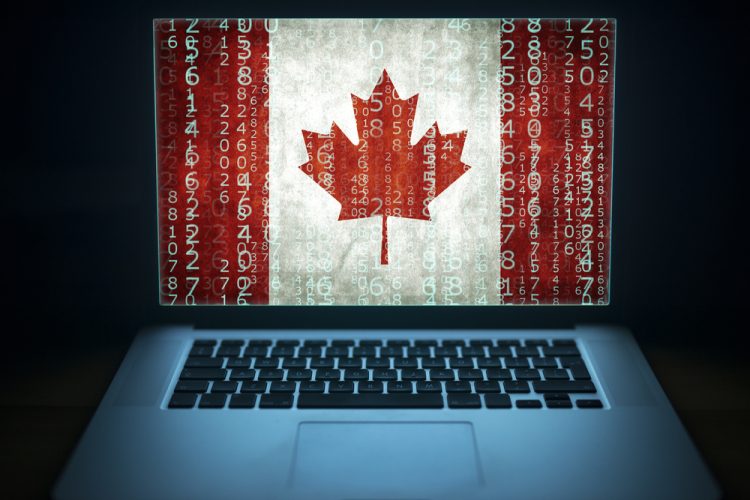
Canada is getting too big for their britches after feuding with Donald Trump.
Now they're quietly pushing a law that would affect nearly every American.
Jim Jordan just sounded the alarm on a globalist surveillance scheme coming from the north.
Canada's Bill C-22 Would Force Apple to Build an Encryption Backdoor
Canada's parliament is moving a bill called C-22, and the bureaucratic name is doing a lot of work to hide what it actually is.
The "Lawful Access Act of 2026" gives Canada's Minister of Public Safety the power to issue secret orders compelling American technology companies to build backdoors into their encrypted systems – the same systems locking down your bank account, your doctor's messages, and every photo on your phone.
Canada's Public Safety Minister Gary Anandasangaree stood before a room full of police chiefs in March and delivered this line with a straight face: "I want to be very clear about what C-22 is not. It is not about the surveillance of honest, hard-working Canadians going on about their daily lives."
Then the bill went on to require every Canadian's location data – where they sleep, which doctor they see, which church they walk into on Sunday – warehoused for a full year on private servers, available for government retrieval on demand.
The companies that receive these secret orders cannot tell anyone they received them.
There is no independent judicial review.
The Intelligence Commissioner reviews the orders. That's the same government that writes them.
Jim Jordan Warns Canada: iPhone Backdoors Put Every American at Risk
House Judiciary Chairman Jim Jordan and House Foreign Affairs Chairman Brian Mast sent Canada's Minister of Public Safety a letter Thursday that named the problem in plain terms.
"If a U.S. based provider is forced to redesign its system to facilitate Canadian authorized access to content that is currently inaccessible even to the provider itself, the resulting capability cannot be geographically limited."
A backdoor built for Canada works everywhere.
Apple cannot build a door that only opens from Ottawa. Chinese intelligence gets the same door. Russian hackers get the same door. Every criminal operation sophisticated enough to find the vulnerability walks through it.
The Heritage Foundation has been clear on where experts stand: encryption protects private communications, financial systems, and personal data from criminals and foreign adversaries alike – and any backdoor hands that protection to exactly the people it was built to stop.
Jordan and Mast didn't just complain. They proposed a solution: use the existing CLOUD Act framework to negotiate a formal data-sharing agreement that gives Canadian law enforcement legitimate access through American legal process – without forcing American companies to gut their own security.
That's the offer on the table.
Canada is still moving the bill forward.
The UK Tried an iCloud Backdoor in 2025 — Here Is What Happened
This isn't a hypothetical. It already happened.
In January 2025, the UK secretly ordered Apple to hand over backdoor access to encrypted iCloud backups – not just for British users, but for every Apple customer in the world, including every American.
Rather than comply, Apple pulled its Advanced Data Protection feature from the UK market entirely.
Tulsi Gabbard – who was never informed of the secret order and expressed "great concern" when she found out – spent months working the problem before announcing in August 2025 that the UK had agreed to drop its demand.
The UK backed down because the Trump administration pushed back hard.
Now look at what Canada just did.
Prime Minister Mark Carney's government watched that entire episode play out – watched Apple yank a security feature from an allied country, watched Gabbard force a reversal, watched Congress hold hearings – and then wrote nearly the identical mandate into Canadian law.
With secret orders.
That companies can't acknowledge receiving.
Mark Carney Called America Untrustworthy — Then Demanded Access to American Data
Mark Carney built his entire political career on hating Trump.
He won Canada's Liberal leadership in March 2025 by calling America "a country we can no longer trust" and vowed to keep retaliatory tariffs on American goods until the United States "shows us some respect."
Canadians voted for him anyway.
This is the man now pushing legislation that would compel Apple, Google, and every major American tech company to build surveillance infrastructure for his government.
Jordan and Mast are the first members of Congress to put it on the record: a foreign government is attempting to force American companies to compromise the privacy of American citizens with no geographic limit on what gets built.
Salt Typhoon – the Chinese government hacking operation that breached multiple American telecom companies in 2024 – got in by exploiting the lawful intercept systems built for government access.
The doors governments build for themselves are the same doors foreign adversaries walk through.
Carney knows this. His government is building one anyway.
Jim Jordan just made sure Ottawa knows America is watching.
Sources:
- Misty Severi, "Exclusive: House GOP warns Canada its new cybersecurity bill could pose privacy risks to Americans," Just the News, May 7, 2026.
- Cindy Harper, "Cybersecurity Experts Demand Canada Scrap Bill C-22 Backdoor," Reclaim The Net, May 2, 2026.
- "U.K. Government Drops Apple Encryption Backdoor Order After U.S. Civil Liberties Pushback," The Hacker News, August 19, 2025.
- "Why a Backdoor to Encrypted Data Is Detrimental to Cybersecurity and Data Integrity," The Heritage Foundation, September 25, 2020.
- "Carney says retaliatory tariffs to stay until America shows us some respect," Semafor, March 11, 2025.