





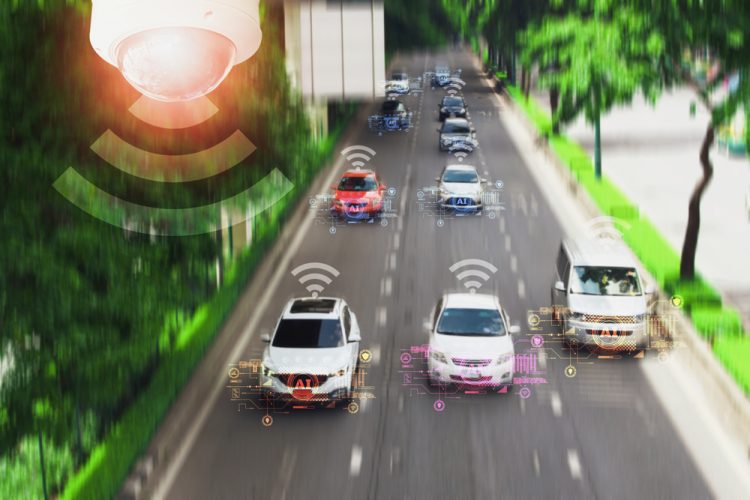
JB Pritzker already doubled Illinois drivers' gas tax.
Now a Chicago Democrat just introduced the bill that comes next.
What Illinois Democrats quietly voted to build has nothing to do with roads.
Illinois Gas Tax Already Doubled Under Pritzker and Now Comes the Mileage Tax
Illinois drivers already pay the second-highest motor fuel tax in the country at 66 cents per gallon.
Pritzker doubled it in 2019.
Add tolls, registration fees, and local taxes on top, and Illinois drivers are funding roads at a premium.
Now state Sen. Ram Villivalam (D-Chicago) wants to build an entirely new system that charges drivers not for the fuel they buy – but for every mile their car moves.
The bill proposes a 1,000-driver pilot program to test per-mile taxation across Illinois.
The expected rate is three to four cents per mile, according to the Chicago Sun-Times.
Drive 12,000 miles a year at three cents – that's $360 stacked on top of what Illinois drivers already pay Pritzker at the pump.
There is no provision in the legislation to lower gas taxes to offset a single dollar of the new charge.
Here is who actually pays that bill.
Not Chicagoans riding the L to work downtown.
Republican voters in the suburbs and rural counties – the ones commuting 30, 40, 50 miles each way because they cannot afford to live inside the city Villivalam represents.
The more miles driven, the more owed.
Democrats packed into Chicago zip codes drive the least and pay the least.
Conservative families in rural counties drive the most and get punished for it.
Oregon Launched the First Pay Per Mile Program in 2015 and Here Is What It Became
Oregon became the first state to launch a per-mile program in 2015 – the OReGO program.
After a decade of operation, fewer than 800 drivers are currently enrolled statewide.
Privacy concerns and technology requirements kept participation so low that Oregon is now preparing to make the system mandatory for electric and hybrid vehicle owners starting in 2027.
That is the blueprint.
Start with a voluntary pilot nobody objects to because participation is small and the politics are easy.
Spend years refining the tracking technology and billing infrastructure.
Then make it mandatory.
Oregon is moving to mandate 2.3 cents per mile for EV owners next year – with hybrids phased in by 2028.
Washington State has been pushing a 2.6-cents-per-mile mileage tax for twelve consecutive years.
Hawaii has a mandatory per-mile program scheduled to begin in 2028 and expand to all light-duty vehicles by 2033.
The Tax Foundation reports 24 states are currently testing or have launched per-mile programs.
Once a government agency can measure how far every driver travels, the next step writes itself.
Massachusetts already created a state council whose only job is figuring out how to reduce the total miles its residents drive.
Not improve roads.
Reduce driving.
That is not infrastructure policy.
That is rationing – applied to freedom of movement.
The same political class that shut down churches and locked people in their homes over COVID is now building the legal and technical framework to decide how far Americans are allowed to go.
A mileage tax is not the destination.
It is the on-ramp.
The American Transportation Research Institute studied what it would actually cost to administer a federal per-mile tax system.
Replacing the fuel tax with mileage tracking across 272 million private vehicles would cost more than $20 billion per year in administration costs alone – 300 times higher than running the current gas tax system.
Collecting the gas tax requires monitoring a few hundred fuel terminal operators.
Collecting a mileage tax requires monitoring every registered vehicle in the country.
That cost gets passed directly to drivers before the first per-mile charge ever hits a bill.
Illinois lawmakers have not answered where that money comes from.
They also have not answered where the current gas tax money is going.
Illinois collects billions annually through fuel taxes, tolls, and vehicle fees.
Before Villivalam and Pritzker ask drivers to fund an entirely new tracking system on top of everything else, they owe Illinois a full public accounting of every dollar already collected.
That accounting never comes.
Arizona Is Voting to Ban the VMT Tax Entirely and Other States Are Watching
While Illinois Democrats push forward, Arizona Republicans voted to put a constitutional ban on mileage taxes directly to voters on the November 2026 ballot.
If it passes, Arizona becomes the first state in the country to constitutionally prohibit per-mile taxation and mileage restrictions.
Scot Mussi of the Arizona Free Enterprise Club said every state that runs one of these programs ends up doing the same thing: expanding it, mandating it, and using it to control how far drivers are allowed to go.
Villivalam's bill already failed once – the 2025 version never got a committee vote and died in the assignments committee.
He is back in 2026 with the same bill and a different number on it.
Illinois drivers stopped this before.
The question is whether enough of them understand what they are actually stopping.
Pritzker took the money at the pump.
Villivalam is building the infrastructure to control what happens after drivers leave it.
Make enough noise and they back down.
Stay quiet and they don't.
Sources:
- Lauren Fix, "Illinois wants to track every mile its drivers drive – is your state next?" Blaze Media, April 29, 2026.
- Illinois Policy Institute, "Illinois again considers taxing drivers per mile," March 14, 2025.
- The Center Square, "With gas tax revenues sliding, Illinois weighs road mileage tax," March 21, 2025.
- Tax Foundation, "State VMT Taxes: Vehicle Miles Traveled," May 2024.
- AZ Free News, "Arizona Voters To Decide On Ban Of Vehicle Miles Traveled Taxes," June 25, 2025.
- ACT News, "Oregon Moves Toward Mandating Per-Mile EV Fees, Expanding on Voluntary Program," September 4, 2025.
- Roy F. McCampbell's Blog, "Illinois Mileage Tracker Tax is Back on Legislative Agenda for 2026," February 8, 2026.