



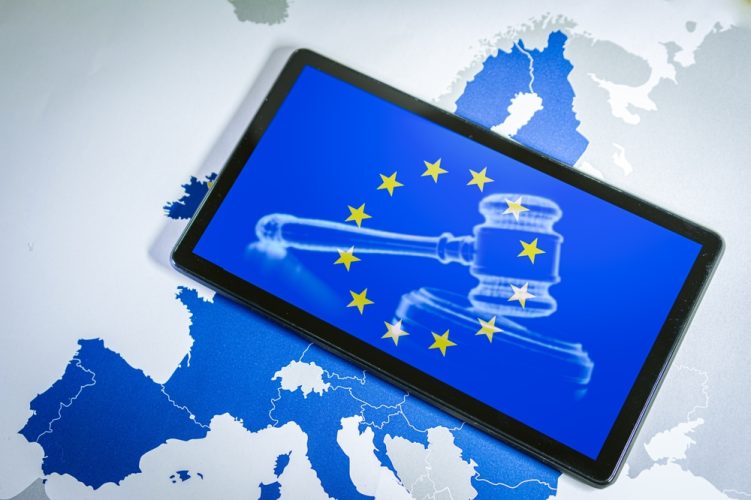
The European Union hit Elon Musk with a $140 million fine for refusing to censor legal speech.
European bureaucrats think they can police American speech.
Now a Senate bill would make every foreign censorship fine legally uncollectable on American soil.
How Ofcom Used the UK Online Safety Act to Silence American Websites
The UK's communications regulator, Ofcom, sent 197 censorship demands to American tech companies under Britain's Online Safety Act.
Not one went through the US-UK Mutual Legal Assistance Treaty – the international agreement that governs exactly this kind of cross-border enforcement. Ofcom's chief executive publicly reserved the right to jail American executives who refused to comply.
98% of the American companies that received those demands handed over what Britain asked for.
Two refused. 4chan's American attorney wrote back to Ofcom that their demands were legally void and would make "excellent bedding" for his "pet hamster." Kiwi Farms did the same.
Ofcom fined 4chan £20,000 anyway. And that fine is still sitting there – unenforceable, uncollected – because American law has no mechanism to make a foreign censorship order stick in a US courtroom. Not yet.
The system works for foreign censors because it does not need to be enforceable. It just needs to be expensive enough that a company's legal department decides compliance is cheaper than resistance.
How the EU Digital Services Act Already Fined Elon Musk for Protected Speech
The European Commission's Digital Services Act doesn't threaten American companies with £20,000 fines. It threatens them with penalties up to 6 percent of global annual revenue.
Brussels already fined X – Elon Musk's company, headquartered in America, run by an American – €120 million in December 2025.
X is fighting that fine in European courts. The company faces over $1 billion in additional DSA penalties. Formal proceedings are running against Meta and TikTok as well.
The House Judiciary Committee, led by Chairman Jim Jordan, investigated the DSA and found the law was specifically engineered to target American companies while exempting European competitors. The compliance thresholds were set at levels that swept in the largest American platforms while leaving most European services untouched. The censorship, the committee confirmed, was almost uniformly aimed at conservative political speech.
The EU doesn't arrest Americans. It doesn't need to. It imposes a fine, lets it sit, and waits for the next contract negotiation when access to European markets becomes a bargaining chip.
The Foreign Censorship Shield That Makes Every Foreign Fine Dead on Arrival
Senator Mike Lee introduced the GRANITE Act – Guaranteeing Rights Against Novel International Tyranny and Extortion Act – on September 23. The bill is currently in the Senate Judiciary Committee. It is four pages long.
It amends federal law to block American courts from giving any legal effect to a foreign censorship judgment – including fines, orders, or demands – when that judgment would violate the First Amendment if issued inside the United States.
The bill defines a foreign censorship law as any measure that restricts or penalizes speech based on its content, viewpoint, or the identity of the speaker.
The bill also gives Americans the right to fight back directly. Any American targeted by a foreign censorship demand can go to federal court and get a formal declaration that the order is unenforceable on US soil.
Companion legislation was introduced in the House by Representative Michael Rulli of Ohio. "Foreign bureaucrats do not get to decide what Americans can say," Rulli said. "It does not bend to Brussels or London."
The concept has momentum at the state level. Wyoming's version passed the state House 46-12. As of this week, a Wyoming Senate committee advanced it 4-1 on a bipartisan vote.
What the First Amendment Was Always Supposed to Mean
Here is what 98 percent compliance with foreign censorship orders actually means: American companies have been quietly letting Brussels and London decide what speech is acceptable for American users, because no federal law told them they didn't have to.
The Founders wrote the First Amendment to end exactly that arrangement. They did not write it to apply only when the censor speaks English with an American accent.
A government that can fine an American company into silence over legal speech is a censor – regardless of whether the paperwork originated in Washington or Westminster.
If the GRANITE Act becomes law, the coercion model collapses. Ofcom can issue all the fines it wants. The EU can threaten 6 percent of global revenue. But if no American court will recognize the judgment and no American asset can be seized to collect it, the fine is a strongly worded email.
Mike Lee did not write a 200-page regulatory framework. He wrote four pages that say what the First Amendment has always said – foreign governments have no authority over American speech – and gave Americans the legal standing to enforce it.
Sources:
- Michael Rulli, "Rulli Introduces Bill to Prevent Foreign Censors from Infringing on First Amendment," House of Representatives, September 16, 2026.
- Foundation for Freedom Online, "Federal GRANITE Act Aims to Shield Americans From Foreign Censorship," Foundation for Freedom Online, August 31, 2026.
- Alliance Defending Freedom, "X Launches Historic Challenge to EU Censorship Law That Threatens Americans' Online Speech," ADF Legal, February 20, 2026.
- House Judiciary Committee Republicans, "The Foreign Censorship Threat: How the European Union's Digital Services Act Compels Global Censorship and Infringes on American Free Speech," House Judiciary Committee, July 2025.