




Hugo Parra spent nearly a month in a cell with murderers for a crime a camera's own timestamp proved he didn't commit.
San Diego police had the proof in their own report – and arrested him anyway.
What the algorithm did next – with the city's full blessing – should terrify every American.
Flock Safety License Plate Reader Placed the Wrong Man at the Crime Scene
On November 26, 2025, San Diego Police responded to an attempted carjacking in the Golden Hill neighborhood.
Officers spotted a red Alfa Romeo with tinted windows and gave chase.
The driver hit 100 miles per hour before vanishing near Little Italy – and officers never captured a plate number, only a description: red Italian sports car, tinted windows, Hispanic male in his 20s, gray hoodie.
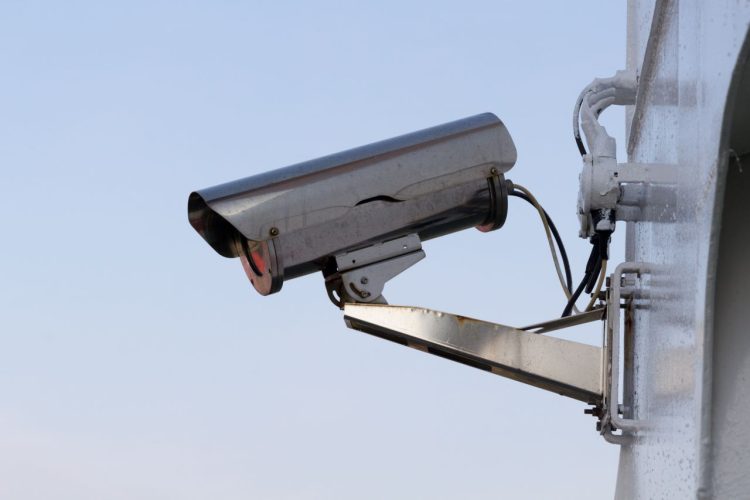
Twenty-three seconds after the suspect disappeared, a Flock automated license plate reader in Old Town photographed a red Alfa Romeo five miles away on Moore Street.
Detective Gary Gonzales – one of the officers who had been in the chase – saw the image and, per his own report, "recognized the vehicle in the image as the vehicle [we] were pursuing due to the red paint and black tinted windows."
The math was right there in his own report.
Twenty-three seconds. Five miles. No vehicle in urban traffic covers that distance.
Attorney Alex Coolman, who represents Hugo Parra and driver Ariel Beltran, stated: "This Flock hit was obviously the wrong car, as it could not have been in both places simultaneously."
Police arrested Parra, Beltran, and a third man anyway, pulling all three out of a cigar lounge.
Police Had the Evidence to Clear Him and Made the Arrest Anyway
The carjacking victim described the suspect in a gray hoodie.
Parra was wearing white.
A search of the car turned up no handgun, though the crime involved a man brandishing one.
Flock cameras lined the route Parra and Beltran had taken to Old Town – cameras that could have placed them miles from Golden Hill at the time of the crime – and both men's cell phones carried location data that told the same story.
None of it stopped anything.
Police drove the victim to Old Town for a curbside identification instead.
The victim picked Parra – citing, per the police report, the jacket, the beard, and the skin color.
An identification built on a garment that didn't match became the spine of a felony case.
Parra told officers exactly where he had been. "My friend picked me up from my apartment in his red Alfa Romeo, then drove straight to the Cigar Shop right there," he said. "Nothing else happened. I am on probation, and I have a fourth waiver."
He went to Central Jail anyway and missed Thanksgiving while sharing a cellblock with men convicted of murder.
Beltran bailed out and spent the next day trying to get anyone at the department to look at the evidence – calling, emailing, showing up in person at Central Division.
The detective wouldn't speak to him. "The only time he answered was when the case was dismissed, stating I was able to go pick up my phone," Beltran said.
San Diego Expanded Its Flock Surveillance Contract Weeks After the False Arrest
The charges against Parra were eventually dropped.
San Diego's response was to deepen its investment in the system that put him there.
The city had already committed $5 million over five years to Flock Safety – a contract signed in 2023 without competitive bidding.
In December 2025 – weeks after Parra's wrongful arrest – the San Diego Police Department quietly signed a separate deal for Flock Nova, a next-generation platform that captures audio and video and pulls data from connected devices.
The department bypassed the city's required surveillance review process entirely, calling the contract exempt.
Then the full city council voted to keep the original Flock system running.
Councilmembers Marni von Wilpert, Raul Campillo, and Joe LaCava voted yes.
Councilwoman Jennifer Campbell, defending the vote, told the chamber: "The federal government already has all of us on their list."
That's the reassurance San Diego offered its residents after locking up the wrong man.
This Is Coming to Your Town
A $7.5 billion tech company is buying its way into your local government – and your tax dollars are funding the purchase.
Flock Safety raised $275 million in March 2025 and now scans more than 20 billion license plates every single month across more than 5,000 American communities.
Independent testing has identified a roughly 10% misidentification rate for those cameras.
Journalists have documented at least 12 wrongful law enforcement encounters caused by Flock misreads – gunpoint stops, wrongful arrests, a police dog attack.
Cities keep signing anyway because that's exactly how the product was designed.
Flock doesn't make money on hardware – it makes money on subscriptions, and once a police department is inside the network, walking away means losing access to 20 billion monthly scans worth of data.
That dependency is the product.
A Cleveland city councilman resigned mid-term in 2025 to go work for Flock.
Oakland County, Michigan just signed on for a free trial – nine months of cameras at no charge, after which the sheriff's office will be so embedded in Flock's network that walking away becomes nearly impossible.
Parra and Beltran each filed tort claims in April seeking $1.5 million from San Diego – and the city denied both.
Coolman framed what's at stake for every city writing these checks: "Mass surveillance without any sense of skepticism, or common sense, is a recipe for disaster. Law enforcement will come up with false positives all the time, the broader the surveillance net is cast."
A lawsuit for civil rights violations and negligence is coming next – and Campillo, von Wilpert, and LaCava will be defending that vote in federal court.
Your city council is probably already taking the sales call.
Sources:
- Jesse Marx and Dorian Hargrove, "A Flock license plate reader linked a San Diego man to a violent crime. He was five miles away," Times of San Diego, June 7, 2026.
- Axios San Diego, "Scoop: San Diego police quietly signed new Flock tech deal," April 29, 2026.
- Axios San Diego, "San Diego City Council approves using Flock license plate surveillance network," December 10, 2025.
- Axios San Diego, "San Diego leaders push police to seek alternatives to Flock for surveillance," December 13, 2025.
- Rain Intelligence, "The Billion-Dollar Surveillance Wave: How Flock Safety's License Plate Readers Are Triggering a Class Action Explosion in California," May 2026.
- State of Surveillance, "Flock Safety's Free Trial Playbook: How a $7.5 Billion Surveillance Company Gets Into Your City," April 11, 2026.