





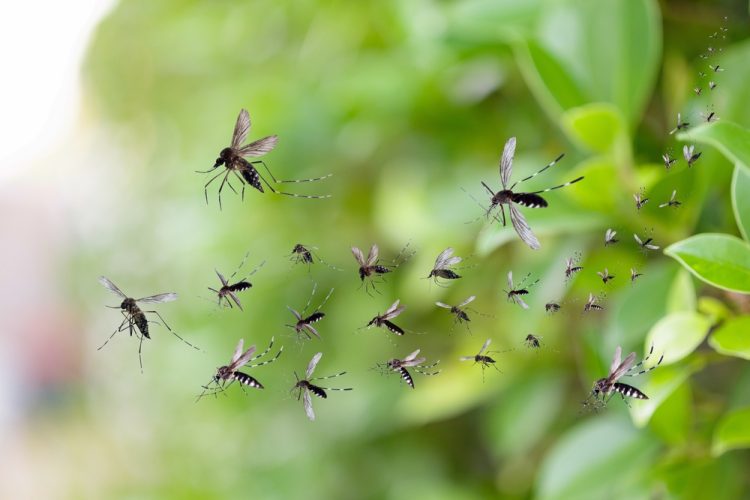
More than 242,000 Americans signed a petition to stop the last mosquito experiment in Florida – and the EPA approved it anyway.
Google just filed for permission to run a far bigger one across two entire states.
What Google is planning to release – and why the EPA hasn't told residents where it will happen – is the part they're hoping nobody ever finds out.
Google Debug Program Has Been Releasing Wolbachia Mosquitoes Since 2017
Most Americans have never heard of Debug.
Google says it wants to eradicate West Nile virus and St. Louis encephalitis – and this is the program it built to do it.
A biotech program buried inside Google's Verily life sciences division, running since 2017, breeding male mosquitoes infected with Wolbachia bacteria and releasing them to mate with wild females whose eggs then fail to hatch.
Verily released as many as 80,000 of these mosquitoes per day across three Fresno County neighborhoods during the 2018 season alone.
Now Google wants federal permission to scale that program to 32 million Culex mosquitoes released across California and Florida over the next two years.
The EPA is accepting public comment through June 5.
Release locations have not been disclosed.
And residents who live near a potential release zone have no way of knowing it – and the EPA has not announced any plan to notify them before the permit is decided.
The Last Mosquito Release Experiment Drew 242000 Petitioners and No Accountability
Americans have been here before.
When Oxitec sought approval to release genetically modified mosquitoes in the Florida Keys, local opposition was immediate and overwhelming.
More than 242,000 people signed a petition demanding the EPA halt the program, calling it a "superbug" project that turned their community into a laboratory without consent.
Florida regulators approved the releases anyway.
The data from the 2021 field trial was never made public or reviewed by independent scientists.
Florida approved a second major release before anyone outside the company had seen the results of the first.
Google is now proposing the same structure for California – a state with zero prior experience with Wolbachia releases at any scale, let alone 32 million insects.
Google frames the threat as urgent: West Nile virus and St. Louis encephalitis are the targets.
CDC data puts the combined death toll from those two diseases at roughly 125 to 134 Americans per year.
That is a real number – and it is also the death toll from U.S. highway accidents in approximately four hours.
Google Wants EPA Approval to Release Mosquitoes Across Two States With No Public Notice of Where
Google says robotic systems and artificial intelligence will handle the breeding, sorting, and release at scale.
No suppression program achieves 100 percent effectiveness in the real world.
A percentage of treated males will produce surviving offspring, and over millions of releases across two states the selection pressure accumulates – creating Culex populations resistant to Wolbachia infection that are harder to control than the ones the program started with.
This is the same biological dynamic that produced antibiotic-resistant bacteria and pesticide-resistant insects over the past five decades.
Jaydee Hanson, policy director at the Center for Food Safety, said it plainly when Oxitec pushed the Florida release through: "What could possibly go wrong? We don't know, because they unlawfully refused to seriously analyze environmental risks."
That critique applied to 750 million modified mosquitoes in one Florida county.
Google wants 32 million across two entire states – with no public notice of where the releases will happen, no announced remediation plan if the program produces resistant insects, and no independent scientific review requirement built into the permit process.
There is only a 30-day public comment window most Americans will never hear about before it closes.
Google has spent years collecting data on searches, location, and behavior without meaningful consent.
Now it wants to use American backyards as the laboratory.
Residents have until June 5 to submit a public comment to the EPA.
After that, this gets decided without them.
Sources:
- Daniel Farr, "Google Planning to Release Millions of Mosquitoes Into California to Help Stop Diseases," New York Post, May 29, 2026.
- "750 Million Genetically Engineered Mosquitoes Approved for Release in Florida Keys," CNN, August 2020.
- "Florida Approves Risky Release of Billions of Genetically Engineered Mosquitoes in Scientifically Flawed Experiment," Center for Food Safety, May 4, 2022.
- Centers for Disease Control and Prevention, "West Nile Virus," CDC.gov, 2025.
- Kristen V Brown, "A Google Plan to Wipe Out Mosquitoes Appears to Be Working," Bloomberg, April 6, 2020.