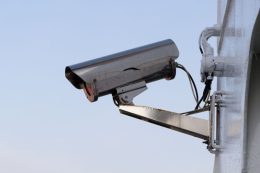



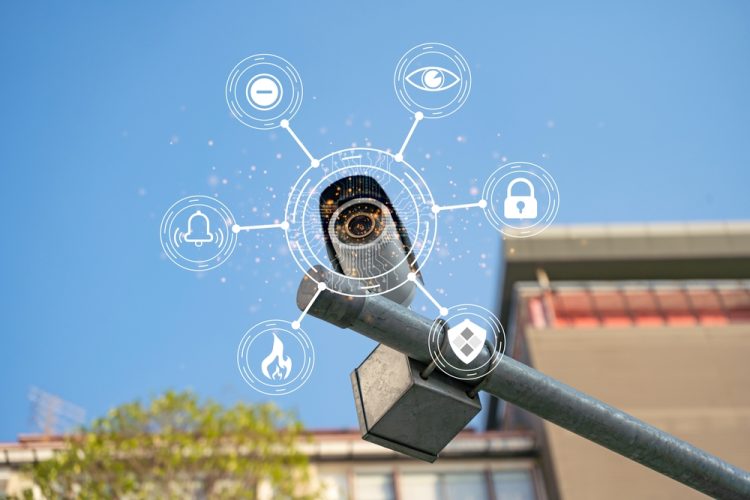
Flock Safety cameras logged license plates roughly 20 billion times last month and never once asked for a warrant.
Now a federal judge has seen exactly what Flock hands police – and she just made it official.
Her ruling on one Tulsa traffic stop is something 6,000 law enforcement agencies were not prepared for.
Tulsa Deputy Searched Flock Safety License Plate Reader Database Without a Warrant and Lost the Entire Case
U.S. District Judge Sara Hill ruled this week that Tulsa County, Oklahoma sheriff's deputy Freddie Alaniz conducted an "Unconstitutional Warrantless Search" when he queried Flock Safety's license-plate camera database on a passing Mazda SUV.
The trigger for the search: the car had a California plate.
That single query pulled more than 50 location records documenting defendant Melisa Kyle's whereabouts across the country for the previous month – with no warrant, no probable cause, and no articulable suspicion beyond the out-of-state registration.
Kyle was eventually pulled over for a lane change violation, and Alaniz used the month of Flock location history to build the case for searching her vehicle.
Authorities found about 91 pounds of methamphetamine packed in luggage, marijuana, and roughly $7,000 in cash.
Hill threw out the Flock records and everything downstream – including all drug evidence – ruling the constitutional violation happened the moment Alaniz opened that database.
"The Fourth Amendment requires courts to draw a line when the cost is too great," Hill wrote.
She called Flock's nationwide network "a type of indiscriminate mass surveillance" and said it is quickly "approaching dragnet-type law enforcement practice."
Flock Safety says the ruling contradicts the overwhelming weight of authority in similar cases across the country and expects an appeal to overturn it.
How Flock Safety's License Plate Reader Network Became a Fourth Amendment Crisis Without a Single Vote in Congress
This ruling did not land out of nowhere.
In Savannah, Georgia, six police department employees were fired in August for abusing Flock cameras.
In Pinellas County, Florida, a deputy was arrested after running roughly 300 Flock searches on a woman he reportedly wanted a relationship with – and a second deputy was caught running lookups on a 17-year-old girl.
More than 50 agencies and jurisdictions have canceled or deactivated Flock contracts since the beginning of 2026.
Sen. Josh Hawley launched a formal investigation into Flock Safety, demanding documents on abuse patterns, data retention policies, and what safeguards actually exist inside the company.
Rep. Tim Burchett introduced legislation to ban federal agencies from buying or accessing automated surveillance systems like Flock's – and to cut off federal dollars to any state or local government that uses them.
Flock CEO Garrett Langley responded by announcing new platform restrictions – cutting the default data retention window from 30 days to seven days and requiring officers to tie searches to specific cases – moves critics dismissed as cosmetic.
Rand Paul said Americans do not surrender their privacy rights when they drive to work, drop their kids at school, or go to church.
President Trump told reporters he "sort of like[s] them" because law enforcement uses the cameras to catch suspects – while acknowledging the privacy debate is real and being studied.
In a few short years, Flock assembled what Hawley himself called an "unprecedented national surveillance network" – and Congress never once authorized it.
The Supreme Court's 2018 Carpenter ruling was already on the books – holding that warrantless access to historical location data violates the Fourth Amendment – and Flock built the whole operation anyway.
Greg Abbott cut off state funding in Texas, Ron DeSantis ordered cameras removed from Florida state roads, and Hawley opened a Senate investigation – and now a federal court has put the constitutional stamp on all of it.
Every one of those moves pointed to the same conclusion: a private company blanketed 49 states with AI-powered tracking cameras, handed data to thousands of law enforcement agencies, and assumed the Constitution would never catch up.
Judge Hill just proved it did.
Sources:
- Jim Hoft, "Federal Judge Rules Warrantless Flock Search Unconstitutional After Deputy Pulls Month of Driver's Travel History," The Gateway Pundit, October 3, 2026.
- Josh Hawley, "Chairman Hawley Investigates AI-Powered Flock Cameras Amidst Privacy Concerns," hawley.senate.gov, August 26, 2026.
- "Three New Companies Face Josh Hawley Investigation in AI Surveillance Vehicle Tracking," Fox News Digital, 2026.