

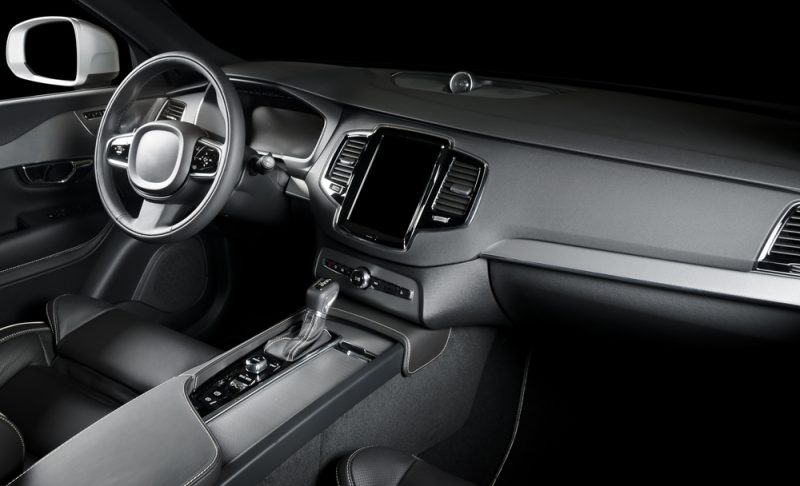
Cars today have more sensors pointed at you than a casino surveillance room.
Those sensors are not just watching – they are reporting.
What Biden signed into law in 2021 means the next car you buy may decide whether you are allowed to drive it.
Automakers Are Already Selling New Car Surveillance Data to Insurance Companies
Jeffrey Tucker rented an SUV in Texas last week, returned it two hours later furious, and wrote about the ordeal in The Epoch Times – the details are infuriating.
Every time he reached for the radio, the car fired off alarm beeps and a flashing demand that he stop for coffee.
When he grabbed a tissue while driving, same warning.
When cars boxed him in on a Texas highway and he navigated the situation the way any experienced driver would, the car started screaming at him.
The bleeping, buzzing dashboard was "more of a danger than the drivers around me," Tucker wrote – a robo-scold more interested in proving he was unfit than helping him reach his destination.
That is not a bug.
Ninety percent of new cars track your driving every three seconds – monitoring speed, braking, phone use, and exact location, according to a 2026 automotive industry analysis.
Automakers pocket up to $100 per vehicle annually selling that data to companies like LexisNexis, who package it for insurance companies.
Only 31% of drivers in these telematics programs ever see their insurance rates go down.
Twenty-four percent end up paying more.
In January 2025, Texas Attorney General Ken Paxton sued Allstate and its data subsidiary Arity for secretly embedding tracking software into popular apps – including Life360 – to harvest location and driving data from more than 45 million Americans without their knowledge.
Allstate then sold those profiles to other insurers, who used them to raise rates.
In January 2026, the FTC finalized a consent order against GM, imposing a five-year ban on sharing geolocation and driver behavior data with data brokers.
GM didn't pay a dime in fines.
The Car Kill Switch Biden Buried in His 2021 Infrastructure Bill
Tucker worried that his rental car profile might someday show 17 coffee alerts on his driving record.
He has no idea what is actually coming.
Buried in Section 24220 of Biden's 2021 Infrastructure Investment and Jobs Act – tucked inside 2,702 pages of legislation passed before most Americans knew it existed – is a mandate requiring impairment detection technology in every new passenger vehicle sold in America.
This is not a pilot program or a voluntary option – it is a federal mandate with a deadline.
The technology uses infrared cameras mounted on steering columns to track eye movement and pupil dilation.
Breath sensors in the steering wheel passively measure alcohol levels as you breathe normally.
When the car decides the driver is impaired – from alcohol, fatigue, or distraction – it can refuse to start.
Or it can limit speed on the interstate with no override available.
NHTSA missed its November 2024 deadline to finalize the rule.
In a February 2026 report to Congress, the agency acknowledged that no in-vehicle technology currently in production can accurately measure blood alcohol content at the legal limit without unacceptable error rates.
At 99.9% accuracy, the math still produces millions of false positives – sober Americans stranded in parking lots because a sensor malfunctioned.
The technology is not ready, and it is coming anyway.
Several House Republicans are already pushing to kill the mandate entirely.
Government Car Tracking Has No Federal Opt-Out and Congress Has Not Fixed It
Senator Mike Lee of Utah introduced the Auto Data Privacy and Autonomy Act in December to give drivers actual control over their own data – making it illegal for automakers to collect or sell driving information without consent and barring data sharing with enemy nations including China.
The bill has not moved.
Tucker is holding onto his 10-year-old car for dear life and swearing never to give in to the new world of rolling surveillance platforms.
Every old car still on the road is an act of defiance.
The government and automakers have quietly built a surveillance economy around the American driver.
Every three seconds, driving data is harvested and sold to the highest bidder.
The insurance company already knows about the hard brake made last Tuesday.
Washington now wants to add a kill switch.
Drunk driving has been illegal for a century, and police already pull impaired drivers off the road.
This mandate is about something else entirely – about who controls access to a vehicle, and the answer Washington is engineering into every 2027 model is not the driver.
Buy used.
Sources:
- Jeffrey Tucker, "A Surveillance State on Wheels," The Epoch Times via ZeroHedge, July 1, 2026.
- Dallas Express, "Ready for Your Next Car to Decide If You're Too Impaired to Drive? Federal Kill Switch Is Moving Forward," April 2026.
- Senator Mike Lee, "Lee Bill Protects Car Owners from Data Harvesting," press release, December 17, 2025.
- Motor1, "Government Requires Driving Monitoring By 2027," April 28, 2026.
- FTC, Consent Order, In the Matter of General Motors LLC and OnStar LLC, January 2026.