



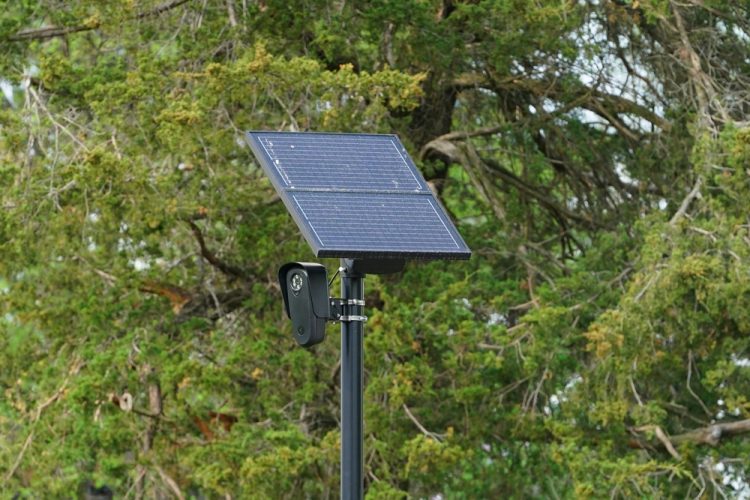
Cities across America signed contracts to put cameras on every street corner – and never read the fine print.
The company that owns those cameras decides when it removes them from the street.
What one Wisconsin police chief saw on his screen is the reason 80 cities are now trying to get out.
What Is Flock Safety and Why Are Its License Plate Reader Cameras on 80000 American Streets
Flock Safety is an Atlanta-based company founded in 2017.
It sells surveillance cameras – called automated license plate readers – to police departments, city governments, schools, retailers, and homeowners' associations.
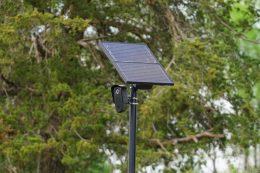
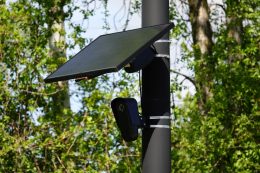
The cameras mount on poles and photograph the back of every vehicle that passes not just the license plate.
Make, model, color, bumper stickers, gun racks, and distinguishing features – all logged automatically, all stored in a cloud database.
Any law enforcement agency with a Flock contract can search that database across jurisdictions.
Flock operates in more than 6,000 communities and logs roughly 20 billion plate reads every month.
The company says its cameras contributed to approximately one million arrests last year.
Law enforcement agencies across the country have called it the most impactful tool they've seen in decades.
What gets mentioned less often is what happens to the data – who else can see it, how long it's kept, and who actually controls the off switch.
What Oshkosh Discovered About Flock Safety and Warrantless Surveillance
Oshkosh, Wisconsin Council Member Brad Spanbauer asked a direct question at the April 2026 meeting.
Does your system create a heat map of a vehicle's movements by combining multiple camera reads?
Flock's representative said no.
Oshkosh Police Chief Dean Smith had personally seen the heat maps.
A Flock employee later confirmed on the record that the system can map where a vehicle travels most on a day-to-day basis.
The council voted 7-0 to rescind the contract the next day.
Oshkosh got lucky.
Most cities don't catch the lie in time.
Flock Safety Owns the Cameras on Your Streets and Cities Cannot Remove Them
When Evanston, Illinois terminated its Flock contract, the company removed the cameras.
Then Flock allegedly reinstalled them – without permission.
Evanston issued a cease-and-desist letter.
Workers covered the cameras with black trash bags while waiting for the company to retrieve hardware sitting on city property.
Flock owns the cameras, not the city.
A private corporation decides when – and whether – it removes surveillance equipment from public streets.
Dayton, Ohio hit the same wall.
After finding that outside agencies had run more than 7,000 unauthorized searches through their camera network, city officials tried to shut the system down.
They couldn't just unplug it.
Contracts loaded with penalties and termination clauses left them one option.
Workers drove through the city pulling black garbage bags over 72 cameras on public poles.
A garbage bag was the only off switch the contract allowed.
Flock's pitch to every city is the same: the data stays local, federal sharing is disabled, and the customer controls access.
Mountain View, California ran an audit and found the ATF, the Air Force, and the GSA Inspector General rooting through its camera data without the city's knowledge.
The promises meant nothing.
One wrong setting and the entire network opens to federal access.
Government Surveillance Has No Political Filter and Conservatives Should Know That
Courts have held that photographing vehicles on public roads requires no warrant.
No probable cause or judicial oversight.
Just Flock's network – 20 billion plate reads a month, stored in a cloud database, accessible to any of the company's 12,000 customers.
Today those customers are using the system to catch car thieves and track illegal aliens.
Conservatives cheering that outcome need to think about who runs the same system in 2029.
The Patriot Act was sold as a counterterrorism tool.
The IRS targeting scandal started with bureaucrats deciding certain political groups deserved extra scrutiny.
The surveillance infrastructure a Republican administration builds today is the infrastructure a Democrat administration inherits in four years.
The same surveillance network aimed at criminals in 2025 can be aimed at gun show parking lots, church attendance, and political rally attendees in 2029.
The data doesn't expire with the election.
Flock's default retention is 30 days – but cities can extend that.
And nothing in the contract prevents a future administration from issuing new guidance on what searches are acceptable.
Flock Safety CEO Called a Website Mapping His Cameras Terroristic
Flock CEO Garrett Langley once described DeFlock – a website that simply plotted his company's camera locations on a public map – as "terroristic."
Not the 20 billion monthly reads, not the unauthorized federal searches, not the cameras allegedly reinstalled without a city's permission.
A map.
The man running a nationwide surveillance network thinks the real threat to public safety is someone telling people where the cameras are.
Residents in Troy, New York ran a city council meeting past midnight demanding answers.
They didn't get them.
The city agreed to a temporary pause – not a cancellation.
And if a Democrat wins the White House in 2028, their administration inherits every camera Flock ever installed, every database it built, and every search log it collected.
The surveillance infrastructure built to catch criminals doesn't come with a political filter.
It never has.
Sources:
- Kris Maher, "The nationwide backlash against cameras watching your car," The Wall Street Journal, June 2026.
- Sasha Rogelberg, "Dayton is covering Flock cameras with trash bags after officials found data use violated policy," Fortune, June 3, 2026.
- "30+ Cities Have Canceled Flock Safety Contracts. The List Keeps Growing," State of Surveillance, May 2026.
- "Cities Are Covering Flock Cameras With Trash Bags," 404 Media, June 2026.