


George Orwell described the surveillance state as a boot stamping on a human face forever.
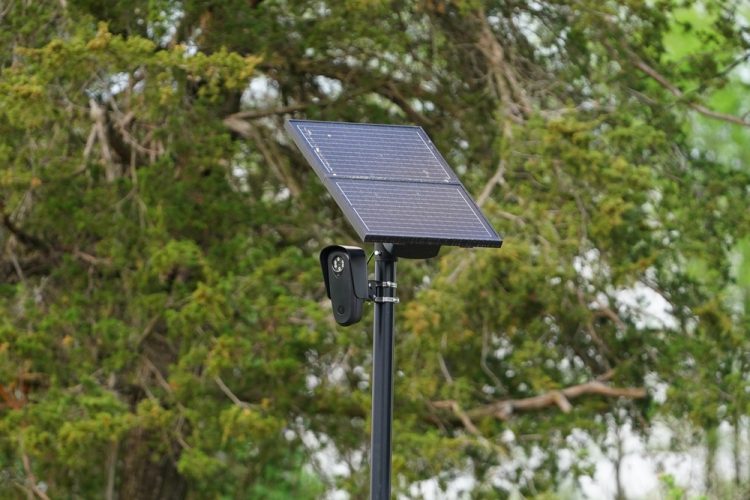
A new study quietly released this week found that boot is now mounted on a solar-powered pole at the end of streets.
What happened to one Arkansas family – a six-week-old strapped in the back seat, officers at the windows with guns drawn – exposed the nightmare the surveillance state is becoming.
License Plate Reader Errors Are Putting Innocent Americans at Gunpoint
A review of media reports and court records by the Institute for Justice tallied at least 24 confirmed cases since 2018 of innocent Americans stopped, held at gunpoint, or jailed because an automated license plate reader produced a bad read.
Nearly two-thirds of those cases ended with officers already pointing guns at the wrong person before anyone realized the mistake.
One driver in Colorado had a "7" on his plate.
The Flock Safety camera read it as a "2."
Officers pulled him over, sicced a police dog on him, and threw him in jail for several hours.
Another Colorado driver had the letter "O" on his plate.
The camera logged it as a zero – flagging him as a criminal suspect.
A third Colorado motorist's plate landed on a hotlist because an officer entered the wrong number.
He was pulled over so many times that someone eventually traced the pattern – and discovered officers had been stopping the wrong person every single time.
AI Surveillance Cameras Scan 20 Billion Plates a Month With No Federal Oversight
Flock Safety is the dominant player in this market, contracted with more than 5,000 law enforcement agencies nationwide and scanning more than 20 billion license plates every month.
Flock claims its cameras correctly read 93 out of every 100 plates that pass by.
Against 20 billion monthly scans, that 7% failure rate produces more than a billion wrong reads every 30 days – logged, transmitted to officers, and acted upon.
In San Diego, officers were hunting a red Alfa Romeo connected to a carjacking.
They had no plate number – only Flock's "vehicle signature" technology, which identifies vehicles by make, model, and color.
The system flagged a matching car five miles away from the crime scene, at the time the crime was being committed.
Officers arrested all three people in the vehicle anyway.
One passenger spent nearly a month in jail over the holidays before anyone figured out they had the wrong car.
"The Constitution requires real suspicion before the government can seize someone at gunpoint," said Michael Soyfer, an Institute for Justice attorney representing plaintiffs in lawsuits against ALPR surveillance networks in San Jose and Norfolk. "A computer hit that no one bothered to confirm doesn't come close."
Machine errors account for only about one-third of the confirmed mistakes.
The rest are human failures – officers who entered the wrong plate number, misread the data, or never removed a recovered vehicle from the criminal hotlist.
In Sherwood, Arkansas, a Flock camera misread an innocent couple's plate and flagged their SUV.
Officers pulled them over at gunpoint while their six-week-old baby sat strapped alone in the back seat.
After uncuffing the couple, one officer offered this explanation: "I'm not gonna say they're completely perfect, because, you know, that's modern technology."
Police Are Using License Plate Reader Data to Stalk Private Citizens
The Institute for Justice separately documented at least 21 cases of police officers using Flock cameras to stalk romantic partners – a pattern confirmed across departments in Georgia, Wisconsin, Florida, and beyond.
A police chief in Braselton, Georgia was arrested for using the system to harass multiple people.
An Idaho sheriff searched for his wife's plate hundreds of times before quietly retiring under pressure.
No federal law governs how automated license plate readers are used, and nothing requires officers to document why they run a query or obtain a warrant before accessing the data.
Republican-led states including Arkansas, Idaho, and Montana enacted laws in 2025 to restrict how plate reader data is collected and shared – because lawmakers in those states recognized that surveillance technology without oversight is a warrant-free window into the movements of every citizen on the road.
The Institute for Justice has sued cities in San Jose and Norfolk, arguing that photographing every vehicle – no suspicion required, no warrant necessary – violates the Fourth Amendment.
A federal judge in Virginia agreed the case should proceed, writing that "a reasonable person could believe that society's expectations of privacy are being violated" by the system.
More than 80 Flock contracts have been terminated since 2021 – communities that looked at what the system actually does and decided they wanted no part of it.
Congress has not acted.
And until that changes, the only thing standing between any American and a gunpoint traffic stop is whether the camera read the zero correctly – or mistook it for the letter O.
Sources:
- Institute for Justice, "Dozens of Innocent Motorists Have Been Pulled Over, Detained at Gunpoint, or Jailed Due to AI License Plate Camera Errors," Institute for Justice, July 2026.
- Institute for Justice, "Police Have Reportedly Used License Plate Readers to Stalk Romantic Interests at Least 21 Times in Recent Years," Institute for Justice, June 2026.
- Institute for Justice, "New Nationwide Campaign Seeks to Stop Warrantless Use of License Plate Reader Cameras," Institute for Justice, August 2025.
- Bob Unruh, "Study finds license plate reader failures cause major headaches for drivers," WorldNetDaily, July 3, 2026.
- "Big Brother on the Road: The Growing Backlash Against License Plate Surveillance," CBT News, May 2026.