


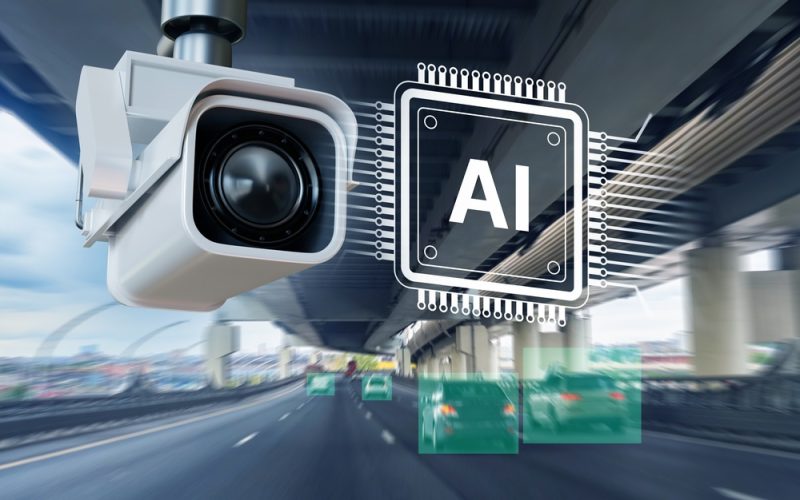
An AI camera tracked a Houston father on a routine business trip and flagged his ordinary drive as suspicious.
Now a jury has exposed what Democrat Sheriff Javier Salazar's office actually did with that surveillance tip.
And how a jury just held a sitting Texas sheriff accountable for four years of abuse should concern every American who drives.
How a License Plate Reader Tip Became a Fake Traffic Stop
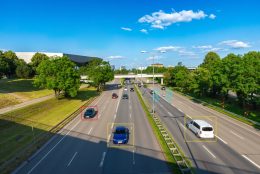
Alek Schott was heading home to Houston on Interstate 35 in 2022 when Deputy Joel Babb started following his Ford F-250.
The reason Babb followed him had nothing to do with anything Schott did on the road.
A network of surveillance cameras had logged Schott's license plate and flagged his travel – driving toward the border and back – as suspicious.
An anonymous tip forwarded to Babb under the name "Kiki" put a target on Schott's truck.
Babb needed a reason to stop him, so he invented one – claiming Schott drifted across a lane line.
Video evidence showed he never did.
Schott was pulled to the shoulder of Interstate 35, placed in the front seat of a patrol car, and interrogated for 76 minutes.
When he refused to consent to a search, deputies manipulated a K-9 dog to alert – giving them the probable cause they needed.
They searched his truck and found nothing.
Bexar County's Five-Step Pretextual Traffic Stop Playbook
The Institute for Justice – the public interest law firm that took Schott's case – laid out the operation in precise detail.
First, cameras across the state and country recorded license plates and logged when and where every car traveled.
Second, analysts and anonymous tipsters flagged ordinary travel – like driving near the border – as suspicious.
Third, deputies invented a traffic violation to justify the stop.
Fourth, they interrogated the driver and asked for consent to search.
Fifth, if the driver refused, a manipulated K-9 alert supplied the probable cause anyway.
This was not a rogue deputy having a bad day – the program ran for four years.
Countless innocent drivers were pulled through that routine – humiliated, searched, and released with no charges.
When confronted, Democrat Sheriff Javier Salazar's office insisted they did nothing wrong.
A federal jury of Texans just found them liable for running an unconstitutional surveillance program.
Schott walked away with $76 – one dollar for every minute he spent detained on that shoulder.
He didn't ask for more.
What Salazar built was mass surveillance dressed up as traffic enforcement.
The CBP License Plate Reader Network Salazar's Deputies Corrupted
The camera that flagged Schott's truck belonged to the federal government, not Bexar County.
Customs and Border Protection built a network of AI cameras stretching from the southern border all the way to Michigan – and that network is how the Trump administration has tracked and deported illegal aliens in record numbers.
That is exactly what those cameras should be used for.
What Javier Salazar's deputies did was take a legitimate law enforcement tool and turn it against innocent drivers going about their business.
When a camera flags a driver, local law enforcement gets the tip and makes the stop – deliberately keeping the real reason buried in internal records rather than court filings.
In Michigan, state records show CBP mounted AI cameras along major interstates with no public announcement – and local deputies are receiving those same tips right now.
Those plates are in that database right now.
Institute for Justice attorney Josh Windham put one line on the record after the verdict: "A deputy went out and found a violation that never happened."
What the Fourth Amendment Verdict Against Bexar County Means for Every Driver
The 1996 Supreme Court decision in Whren v. United States gave police enormous cover – ruling that as long as an officer has probable cause for any traffic violation, the stop is legal regardless of the real motive.
Salazar's operation shows exactly how sheriffs abuse that ruling: manufacture the probable cause, and the entire machinery looks legal on paper.
The Texas jury said fabricating a violation – inventing a drift that video evidence proves never happened – crosses even that permissive legal line.
Every county running this playbook should understand what just happened in that courtroom.
You can flag a father's ordinary business trip as suspicious.
But when a deputy lies to create the stop, a jury will hold them accountable.
The Institute for Justice will now ask the court to shut Salazar's program down entirely.
And with AI cameras already mounted across Michigan and states beyond – with local deputies already receiving those tips and inventing reasons to act on them – this verdict is the warning shot every agency in the country just heard.
Sources:
- Institute for Justice, "Jury Holds Bexar County Liable for Unconstitutional Surveillance Traffic Stop Program," IJ.org, October 2026.
- Bob Unruh, "This is what mass surveillance looks like: Jury finds sheriff liable for scheme to stop innocent drivers," WorldNetDaily, October 1, 2026.
- "Mass Surveillance Is Powering a New Era of Pretextual Traffic Stops," Reason, November 24, 2025.
- "A Supreme Court Decision That Did Lasting Damage to the 4th Amendment," Reason, May 12, 2021.
- "Feds' Secret Plate Cameras Rattle Michigan Drivers," Hoodline, May 22, 2026.