



The NYPD searched a private surveillance network 1,710 times – and never once had permission to do it.
That network stretches across 49 states – and until last week, it answered to nobody.
Josh Hawley just introduced a bill that changes all of that – and Flock Safety is not going to like it.
How Flock Safety License Plate Readers Built a National Tracking Network With No Federal Rules
Flock Safety doesn't make security cameras.
It built a national surveillance infrastructure.
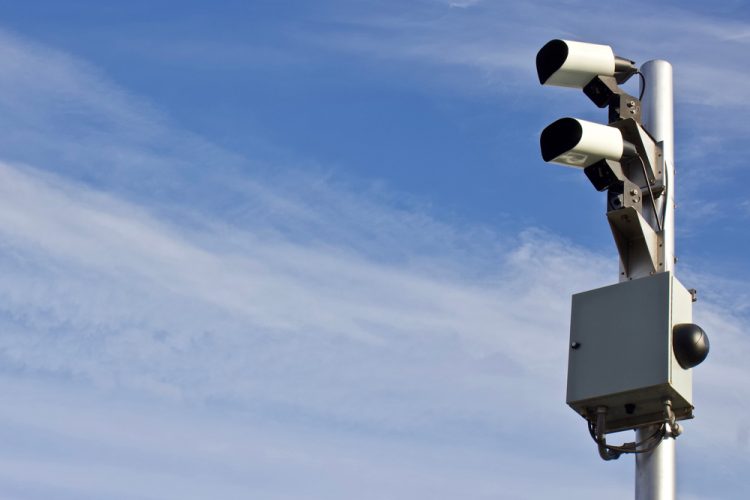
More than 120,000 cameras are deployed across American roads, neighborhoods, and intersections – photographing every vehicle that passes and logging the license plate, make, model, color, and location with a timestamp.
That data feeds into contracts with more than 5,000 law enforcement agencies nationwide.
Through a feature Flock calls "National Lookup," any participating agency can search camera data from any city in the country – no warrant required.
A detective in Kansas City can search a Miami camera's records the same way he would search his own department's database.
Federal agencies including ICE, the Secret Service, and the Navy all had access to that national network.
Cities across the country discovered after the fact that their local data was flowing to agencies they never approved.
There was no federal law requiring disclosure, no mandatory audit, and no limit on how long the data was kept.
Investigators have documented at least 50 law enforcement officers nationwide charged or accused of improper use – the Indianapolis arrests being only the latest.
The Stop Flock Abuse Act and What It Does to License Plate Reader Data
Senator Josh Hawley launched a formal investigation into Flock and other surveillance companies in August.
He chaired a Senate Judiciary Subcommittee hearing on the technology last week and invited the CEOs of Flock Safety, Axon, Motorola, and Verkada to testify.
All of them declined.
Flock Safety CEO Garrett Langley submitted a written response and conceded in it that Congress should establish a federal regulatory framework for the cameras.
The company that built a 120,000-camera network across America admitted it needs to be regulated – just not on the record.
One witness who did appear was Lindsey Isaacs, a Florida woman who spent 13 days in jail after a Flock camera incorrectly flagged her vehicle – she spent much of the hearing in tears.
"Law-abiding Americans should not be treated like criminals," Hawley said.
Hawley introduced the Stop Flock Abuse Act following the hearing.
Driver location data would be deleted within 10 days under the legislation, with narrow exceptions for active criminal investigations.
Before any search could be run, officers would need written authorization – with every query logged by name, reason, supervisory sign-off, and the specific data retrieved.
Supervisors would be required to audit those logs regularly for red flags, including repeated searches of the same individual.
The bill bans cameras from incorporating hardware or software from foreign adversaries, prohibits facial recognition technology, and blocks all third-party data sales.
Hawley said what makes the network dangerous isn't just the number of cameras but "the fact that they're all linked together, empowered and searchable by AI."
Even Democrats at Hawley's hearing couldn't defend what Flock has been doing – and several have introduced their own legislation targeting the same cameras.
When the other side stops defending a company, that company's days of operating without rules are over.
Why License Plate Reader Surveillance Without a Warrant Violates the Fourth Amendment
The Founders didn't write the Fourth Amendment to protect criminals – they wrote it because a government that tracks your movements without answering to a judge is not a free country.
Flock Safety built exactly that – and sold access to thousands of law enforcement agencies as a monthly subscription.
A federal judge in 2025 already ruled that warrantless long-term license plate reader tracking "plausibly violated the Fourth Amendment" and refused to dismiss the lawsuit.
Hawley isn't waiting for the courts to finish the job.
Every time your car passes a Flock camera, it gets photographed, logged, and entered into a database that thousands of agencies can search without your knowledge and without a warrant.
What Flock built isn't public safety infrastructure – it's a private surveillance state that ran for years without a single federal rule.
Flock Safety built 120,000 cameras across America, handed access to federal agencies without authorization, and spent years betting that nobody in Washington would notice.
Josh Hawley just noticed.
Sources:
- Solange Reyner, "Sen. Hawley Introduces Bill to Rein in Flock Cameras," Newsmax, September 30, 2026.
- Robert Legare, "Josh Hawley introduces bill aimed at stopping abuse of Flock cameras and similar AI technology," CBS News, September 30, 2026.
- The Record, "Hawley Introduces ALPR Legislation Targeting Flock Safety," The Record, September 30, 2026.