



The Butler shooter flew a drone over the crowd for 11 minutes before nearly killing Trump.
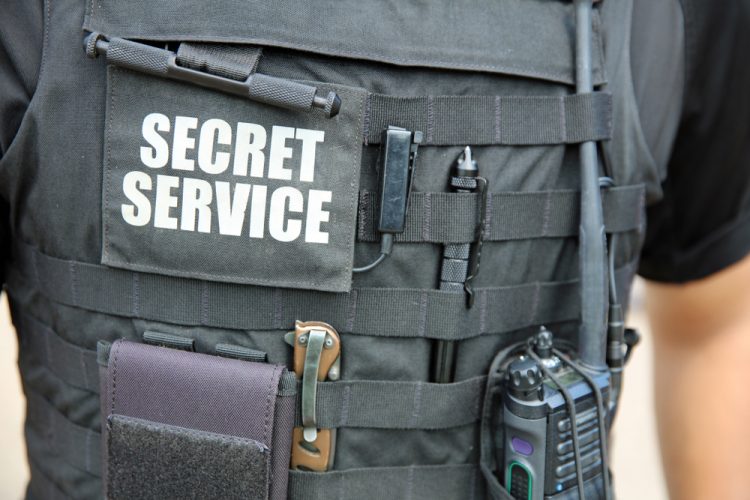
A new government report just revealed the Secret Service saw drone warnings for nine years before that day.
What they found buried in those incident reports should make every American furious.
Secret Service Ignored Drone Warnings for 9 Years Before the Butler Shooting
The Government Accountability Office just released a damning audit covering a decade of Secret Service performance – and the numbers tell the whole story.
The GAO counted 83 security incidents that crossed the agency's desk between 2015 and 2025.
Protection policies were revised after 25 of them.
That means the agency responsible for protecting the President of the United States ignored 58 security warnings without documenting a single reason why.
Those warnings included multiple drone incidents – a drone struck Obama's motorcade in Hawaii in 2015, and another buzzed a Bernie Sanders campaign rally at 200 feet.
The Secret Service saw those incidents and changed nothing.
No policy update. No documentation explaining why no policy update was needed. Nothing.
Thomas Matthew Crooks used a consumer drone to survey the Butler rally site and position himself for a near-fatal shot at President Trump.
Nine years of warning signs and none of them changed a thing.
Secret Service Budget Hit $3.4 Billion as Security Failures Mounted
The Secret Service budget didn't shrink during this period of willful neglect.
It grew 82 percent – from $1.84 billion in fiscal 2015 to $3.4 billion in fiscal 2025.
American taxpayers funded all of it, and the agency still failed to update a single policy document covering drones.
The GAO also found the Secret Service failed to update eight of 22 protection policies within the required four-year window.
The memorandum of understanding between the Secret Service and the Diplomatic Security Service – the document establishing who is responsible for the president's overseas security – hasn't been updated since 1991.
Since 1991, the threat landscape transformed entirely: al-Qaeda, the September 11 attacks, ISIS, domestic terrorism, and now weaponized drones.
That document still reads like a Cold War relic.
GAO Acting Director Nathan Tranquilli put it diplomatically: "When decisions were being made about where to put time and energy, some of these things fell to the side."
Senator Chuck Grassley was less diplomatic.
A separate Senate Judiciary Committee report Grassley commissioned found that Secret Service officials received classified intelligence about a specific threat to Trump's life ten days before the Butler rally – and never passed it to agents on the ground.
The agency had built no mechanism for getting classified threat intelligence down to field agents unless leadership judged it an "imminent threat to life."
They got the warning. They said nothing.
Senator Josh Hawley revealed whistleblower allegations that the Secret Service turned down offers of counter-drone coverage from local law enforcement the night before the Butler rally.
The agency that ignored nine years of drone warnings also refused outside drone support the night before someone nearly put a bullet through the president's skull.
Kimberly Cheatle Ran the Secret Service While It Buried the Evidence
The Secret Service doesn't get credit for the threats that never land.
But the pattern exposed by this GAO report isn't a series of honest mistakes – and it has a name attached to it.
Kimberly Cheatle ran the Secret Service from 2022 until she resigned in disgrace after Butler.
She presided over the agency while it ignored drone warnings, failed to update a foreign security agreement last touched during the first Bush administration, and built no process for sharing classified threat intelligence with agents in the field.
When Congress finally dragged her in front of the cameras, she stonewalled.
Days later she was gone – but the institutional rot she oversaw stayed behind.
It's a system that collected warnings, buried them, and kept cashing its budget checks.
Since Butler, the threat environment has only grown more dangerous.
In April 2026, an armed man breached security at the White House Correspondents' Dinner – the first one Trump attended as sitting president – firing a shotgun near the main security screening area.
Trump and Melania were evacuated.
The GAO recommended three reforms, including requiring agents to formally document why they chose not to update policy after a security incident.
That should have been standard operating procedure before 2015.
The Secret Service collected 83 warnings, ignored 58 of them, watched a drone help position an assassin's bullet millimeters from the president's skull – and it took a government audit two years later to force that conversation.
The agents who put their bodies between threats and the president deserve better leadership.
So does President Trump.
Sources:
- U.S. Government Accountability Office, "Secret Service: Protection Policies Should be Consistently Updated to Better Ensure Protectee Safety," GAO-26-108455, September 3, 2026.
- Guy Taylor, "Secret Service left drone warnings unaddressed for years before Trump shooting," The Washington Times, September 3, 2026.
- Sen. Chuck Grassley, Senate Judiciary Committee, "Grassley Report Concludes Secret Service Failure to Share Threat Information Allowed for Preventable Tragedy in Butler," July 2025.
- Sen. Josh Hawley, Letter to Secretary Alejandro Mayorkas, July 25, 2024.
- Sen. Ron Johnson, Sen. Gary Peters, Sen. Rand Paul, Sen. Richard Blumenthal, "Examination of U.S. Secret Service Planning and Security Failures Related to the July 13, 2024 Assassination Attempt," September 2024.