





The last time America used this law, Teddy Roosevelt was charging up San Juan Hill.
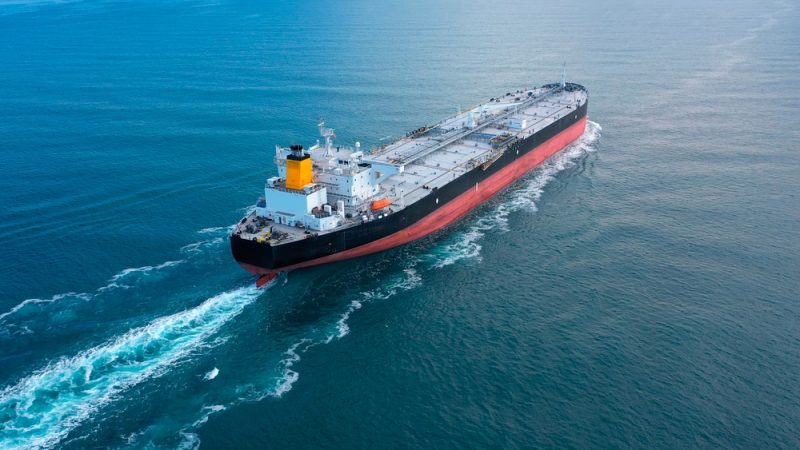
Trump's DOJ just dug it back up – and Iran's tankers are the target.
What DOJ plans to do with every barrel the Navy captures is why Tehran is panicking.
The Justice Department confirmed it is reviving maritime prize courts – a constitutional authority used continuously from America's founding through the Spanish-American War and dormant for more than a century until now.
U.S. Attorney Aaron Reitz, running the operation out of the Southern District of Texas in Houston, confirmed the revival in a statement to Fox Business.
"Our national security interests may require the United States military to seize vessels or cargo supporting the enemy during military conflict," Reitz said.
"If that happens, our federal courts must be ready to adjudicate the disposition of these captured vessels and cargo."
The mechanism is straightforward.
Once the Navy brings a vessel in, a federal judge rules on whether the seizure was lawful under the laws of war.
A yes from the bench means the government owns the cargo – oil, ship, everything – and sends it to auction.
The money goes to the Treasury.
The constitutional foundation has been in place since 1794, when the Supreme Court confirmed in Glass v. The Sloop Betsey that federal district courts hold prize authority directly under the Captures Clause – Congress's power to "make Rules concerning Captures on Land and Water."
How DOJ Prize Courts Seize Iranian Oil Where Civil Forfeiture Failed
For years, DOJ relied on civil forfeiture to go after Iranian oil – and the process has always moved at the speed of litigation.
The 2020 seizure of four Iranian tankers showed exactly how slow that is: the government didn't file its forfeiture complaint until July, the seizure order didn't come until mid-August, and the oil didn't sell until October.
Three months to move cargo.
Prize courts cut that down to weeks – the moment a judge validates a capture as lawful, title clears and the cargo moves to auction.
That speed matters now more than ever.
Iran's position under the blockade is collapsing.
Gas lines now stretch around city blocks in the capital.
Iranian state energy officials say fuel supplies have reached a breaking point, with the government burning through strategic reserves it cannot replace.
Prize courts give those fuel lines a permanent address.
Every tanker condemned in a prize proceeding is revenue that never returns to Tehran and oil that reaches American-controlled markets instead.
Trump already tested a version of this doctrine at a different level.
After the January capture of Nicolas Maduro, Trump announced a century-long oil concession over 17 Venezuelan fields – what he described as the biggest oil deal in world history – with effective American control of production.
Prize courts at sea, oil concessions on land – the same doctrine running in two theaters at once.
What the Prize Court Revival Means for the Iran Blockade and Everyone Running It
Expect the legal fight to start the moment a court validates the first seizure.
Shipping companies, insurers, and cargo claimants can all appear in prize proceedings and contest the capture.
The central question is whether the Iran conflict qualifies as a formally recognized armed conflict under prize law – Congress has not issued a formal declaration of war, and that question will define every proceeding.
Vessel owners will argue their ships were neutral carriers rather than enemy property.
That distinction has been litigated since the age of sail.
It won't resolve quickly.
But those challenges don't make the strategy wrong.
They make Iran's legal bills as steep as its fuel bills.
For roughly 80 years, Washington treated keeping what its military captured as something slightly embarrassing.
We absorbed the cost of every conflict and called the restraint principled.
Trump's administration is done pretending that's how winners behave.
Prize courts accelerate financial pressure on a regime already rationing gasoline, establish legal architecture that will outlast this war, and send a message every adversary from Beijing to Caracas will understand.
America isn't just blocking Iran's oil from reaching the market.
America is taking it.
And keeping it.
Sources:
- Aaron Reitz, DOJ statement, Fox Business, August 28, 2026.
- "DOJ Plans to Revive Maritime Prize Courts to Seize Iranian Oil Tankers as War Prizes," Fox Business, August 28, 2026.
- Jay Rogers, "How The U.S. Can Use Maritime Prize Law Against Iranian Oil Tankers," The Federalist, September 4, 2026.
- U.S. Central Command, blockade enforcement statement, August 2026.