





Susette Kelo watched the government bulldoze her home to build a hotel that was never built.
Now the Supreme Court has another chance to stop the government from taking everything you own over nothing.
The judge sided with this veteran twice – and Alaska still found a way to take his plane.
Alaska Used Civil Asset Forfeiture to Seize a $95,000 Plane Over a $1,500 Misdemeanor
Kenneth Jouppi spent four years in the Air Force working on B-52 bombers before falling in love with the Alaskan sky.
He got his pilot's license in the late 1960s, moved to Alaska in the late 1970s, and built a solo charter operation flying Alaskans in and out of villages the road system never reached.
In April 2012, Jouppi – at the controls of his own 1969 Cessna – agreed to transport a passenger and her groceries from Fairbanks to Beaver, a small village that had banned alcohol.
State troopers showed up before the plane ever left the runway.
They found the passenger's luggage packed with 72 cans of Budweiser and Bud Light, along with one six-pack sitting loose in a shopping bag.
Jouppi said he didn't know the beer was there.
The trial court concluded he was "willfully blind" to the six-pack and convicted him of a misdemeanor.
His sentence: three days in jail and a $1,500 fine.
Alaska's mandatory forfeiture law had other ideas.
State law required the government to seize Jouppi's Cessna – valued at $95,000, the aircraft that kept his lights on and his only income beyond Social Security.
That forfeiture was 63 times more severe than the penalty the judge actually imposed.
The Eighth Amendment Case the Trial Judge Rejected Twice Before Alaska Appealed to the Supreme Court
The trial judge looked at what Alaska was asking and refused.
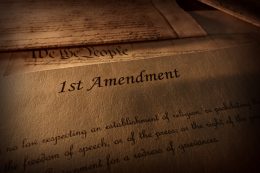
The state appealed, and the case landed back before the same judge, who refused a second time – declaring the forfeiture a violation of the Eighth Amendment's excessive fines clause.
Alaska prosecutors appealed again – betting a higher court would let them keep the $95,000.
This time the Alaska Supreme Court overruled him, holding that the $95,000 seizure was not excessive when measured against the broad harms of alcohol abuse in rural Alaska.
"The illegal importation of even a six-pack of beer causes grave societal harm," the Alaska Supreme Court wrote.
That is the sentence that should make every American's blood boil.
Alaska wasn't measuring Jouppi's punishment against what Jouppi did.
The state was measuring it against every alcohol-related death, disease, and crime in rural Alaska – then handing him the bill.
Jouppi's attorneys – backed by the Institute for Justice – petitioned the U.S. Supreme Court to step in.
In July 2026, the Court agreed to hear the case.
Oral arguments in Jouppi v. Alaska are set for December 1.
What Jouppi v Alaska Could Finally Do to Civil Asset Forfeiture and Government Property Seizures
Cully Stimson, a senior legal fellow at the Heritage Foundation, called this "the case that libertarians and freedom-minded people have been hoping for for years."
He told Fox News Digital it should be 9-0 for Jouppi.
Do courts measure whether a fine is excessive against the gravity of what this specific defendant actually did – or against the abstract societal harm the offense category might cause?
Alaska wants the abstract standard.
Under that standard, punishment doesn't have to fit the crime.
It just has to fit the category – and the government gets to define the category as broadly as it wants.
The Eighth Amendment's prohibition on excessive fines traces directly to the Magna Carta of 1215 – eight centuries of Western law built on the principle that punishment must be proportionate to actual wrongdoing.
The Supreme Court has ruled on the excessive fines clause only five times in its entire history and has never clearly defined what makes a fine excessive.
That ambiguity is exactly what Alaska exploited – and what courts across the country have been exploiting ever since.
This case isn't just about Jouppi's Cessna.
Law enforcement agencies keep the proceeds from every forfeiture they execute – a direct financial incentive to seize as much property as possible from as many Americans as possible.
"The proceeds of that benefit the law enforcement agency and pay for their extra weapons, their cars, their new buildings, their uniforms and the rest of it," Stimson told Fox News Digital.
That is why Alaska prosecutors kept appealing a case that the same judge had already thrown out twice.
A ruling in Jouppi's favor would force courts to measure every fine against what a specific defendant actually did – not against whatever societal crisis a creative prosecutor decides to attach to the offense.
For an 82-year-old Air Force veteran who never left the runway, that is the only standard that makes any sense.
For the rest of America, it is the only standard the Constitution allows.
Sources:
- Andrew Mark Miller, "How a six-pack of beer and the Magna Carta could finally fix a problem plaguing Americans for decades," Fox News, September 26, 2026.
- Cully Stimson, "Jouppi v. Alaska: Eight Centuries of Proportionality," The Daily Signal, September 2026.