


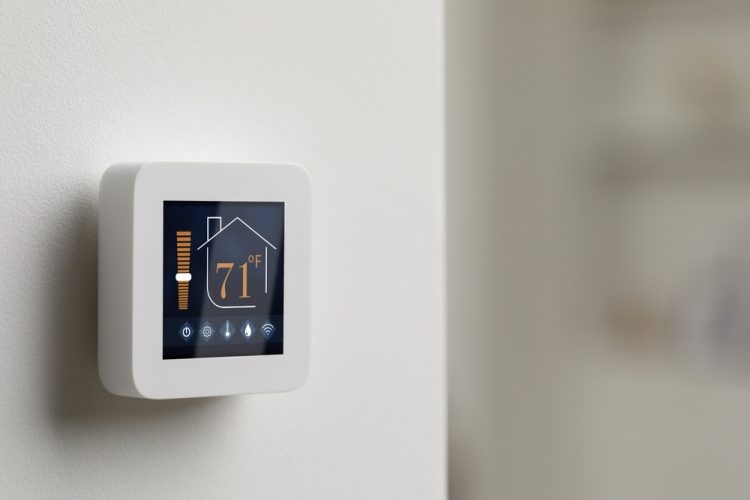
The smart thermostat promised to put homeowners in complete control of their own comfort.
But this technology has a major red flag.
And what's in millions of homes just opened the door for government to play big brother.
The Device Marketed as a Convenience Is a Remote Control for Someone Else
University of Colorado engineering professor Kyri Baker thought she was getting a deal when she signed up for Xcel Energy's Saver's Switch program – a bill credit in exchange for letting the utility adjust her air conditioning during peak demand.
Then Colorado hit 100 degrees.
Baker tried to lower her thermostat from 79 to 75.
Her screen responded with this: "To conserve energy in your community due to stress on the regional energy grid, you cannot set your temperature to be lower."
"I just wanted to set it to 75, something very reasonable so my daughter could fall asleep," Baker told Denver's 9News.
At one point the downstairs thermostat locked at 80 degrees with no override available.
"It kept saying on the screen that you cannot change it," Baker said.
This is not a bug.
Smart thermostats connected to utility demand response programs are engineered to accept remote commands from outside the home. During a declared emergency, those commands can lock the device entirely – no override, no negotiation.
The utility is the primary user of the device, not the homeowner who bought it.
Baker enrolled voluntarily and still found herself trapped at 80 degrees with no way out.
The $100 credit she collected to join the program had long since been spent.
In 2022 Xcel Proved This Infrastructure Works on 22,000 Homes at Once
Xcel has done this before.
In 2022, Xcel locked approximately 22,000 Colorado customers out of their thermostats simultaneously when temperatures spiked and a power plant went offline at the same time.
Those customers received a message that their thermostats would be temporarily locked due to a "loss of generation."
It was the first time in the program's six-year history that enrolled customers could not override the lockout.
Xcel vice president of customer solutions Emmett Romine wasn’t troubled by the reaction.
"It is a bit uncomfortable for a short period of time, but it's very, very helpful," Romine told Denver's ABC affiliate.
Tony Talarico was one of the 22,000 locked out that day.
"Even if it's a once-in-a-blue-moon situation, it just doesn't sit right with us to not be able to control our own thermostat in our house," Talarico said.
Demand response programs modeled on Xcel's now operate in California, Arizona, Florida, Illinois, Texas, and more than a dozen other states.
The pitch is always voluntary enrollment and small credits.
The fine print about what customers are surrendering never gets the same font size.
California Already Has the Grid Problem and Every Home With a Smart Thermostat Is the Solution
The demand response program exists because radical green energy mandates have made the grid unreliable.
Intermittent wind and solar cannot replace baseload power on a 100-degree day.
When the grid buckles under a heat wave, utilities need to cut demand fast – and the smart thermostat is how they do it without triggering the blackouts that make headlines.
The Baker lockout and the 2022 event are test runs.
The infrastructure that locked 22,000 Colorado homes in a single afternoon is the same infrastructure that locks two million homes if a governor declares an energy emergency.
California has already told residents during heat waves to set thermostats to 78 degrees or higher and stop charging electric vehicles during peak hours.
That is a request today.
California has the most aggressive radical green energy mandates in the country and a grid that is under heavy stress every summer.
The governor has never encountered a regulation he did not want to enforce.
Gavin Newsom asking residents to set thermostats to 78 degrees is one emergency declaration away from Gavin Newsom setting them to 78 degrees.
The governors of Texas, Florida, and Arizona have access to the same infrastructure the moment an energy emergency gets declared.
The device that makes that possible is sitting on the wall in millions of American homes right now.
The homeowner who invited it in got $100 and a bill credit.
The utility got a remote control.
Sources:
- Bob Hoge, "Colorado Woman Finds Out the Hard Way Why You Never Want a 'Smart' Thermostat in Your House," RedState, August 13, 2026.
- "Colorado Residents Find Thermostats Locked At 78 Degrees Due To 'Energy Emergency'," Daily Wire, September 2, 2022.
- "Thousands of Coloradans Locked Out of Their Smart Thermostats Due to 'Energy Emergency'," Breitbart, September 3, 2022.