





Biden spent four years trying to hand Washington a master key to your bank account.
That key doesn't just let bureaucrats watch every dollar you spend – it lets them freeze your funds without a warrant and program what you're allowed to buy.
Ted Cruz threw a monkey wrench in that plan but there's a catch that has House conservatives furious.
What Is a CBDC — and Why Washington Wants One
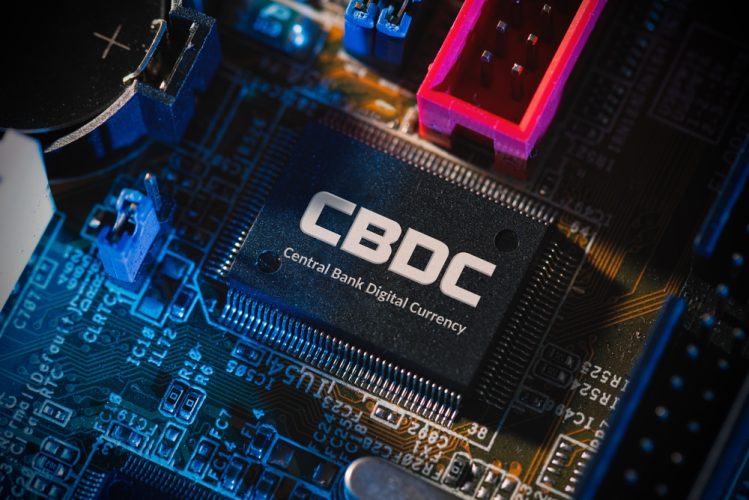
A Central Bank Digital Currency (CBDC) is a digital dollar that would be issued directly by the Federal Reserve – government-controlled, government-monitored, programmable money that gives Washington a real-time window into every transaction you make.
Not a bank or credit card company.
The federal government itself.
The U.S. Senate passed the 21st Century Road to Housing Act, burying a critical provision in the final pages of the 302-page bill.
That provision blocks the Federal Reserve from issuing a central bank digital currency – a CBDC – through December 31, 2030.
The language is direct: the Fed "may not issue or create a central bank digital currency or any digital asset that is substantially similar."
Eighty-nine senators don't agree on anything – except that Washington should never control your wallet.
DeSantis saw this coming three years ago.
In May 2023, Florida became the first state to outlaw CBDC use entirely – blocking it from Florida's Uniform Commercial Code before Washington even had a plan.
"Once they have the ability to run a central bank digital currency, they're going to be able to have the window into what you're doing with the money," DeSantis warned at the signing ceremony.
He was right.
Other states followed, passing their own anti-CBDC laws as the threat became impossible to ignore.
They had good reason to move fast.
Right now, 134 countries – representing 98% of global GDP – are actively researching or piloting a government-run digital currency.
The European Union is building one.
China already has one running, with 7 trillion digital yuan processed across 17 provinces.
This isn't a fringe idea from authoritarian governments.
It's spreading everywhere.
And Congress is finally catching up.
The Digital Dollar Would Give the Federal Reserve Access to Every Transaction You Make
Ray Dalio, one of the most successful investors alive, sat down with Tucker Carlson and said it plainly: "There will be no privacy, and it's a very effective controlling mechanism by the government."
Dalio added that CBDCs would likely be automatically taxable and freezable by Washington bureaucrats – no warrant, no hearing, no recourse.
Heritage Action warned that while Americans are already being punished for thinking, speaking, and voting the wrong way, putting financial surveillance tools in Washington's hands would hand bureaucrats the most powerful weapon yet.
Congressman Tom Emmer, who authored the House version of the anti-CBDC legislation, called it "government-controlled, programmable money" that could "suppress politically unpopular activity."
The government programs what you're allowed to buy, what purchases get flagged, and what accounts get frozen.
You don't have to imagine what that looks like in practice – China is already doing it.
Beijing's CBDC feeds transaction data directly into its social credit system in real time, giving the Communist Party the ability to cut off access to funds as punishment.
Beijing built it first – and Biden spent four years trying to bring it home.
The CBDC Ban Expires in 2030 — and That Has Republicans Fighting Back
The ban expires in 2030.
That means a new administration – or a new Federal Reserve chair – flips the switch the moment a Democrat wins the White House.
Representative Scott Perry of Pennsylvania torched the Senate bill publicly.
"We're interested in making sure that there's never going to be a central bank digital currency that controls what people spend and where they spend it," Perry said.
Congresswoman Anna Paulina Luna didn't mince words either – warning the fight will "get nasty" when the Senate's bill hits the House floor with a sunset provision attached.
Ted Cruz tried to fix this before the vote.
He filed an amendment to strip the sunset provision entirely and make the CBDC ban permanent.
Thirty-one House and Senate members signed a letter demanding the same – calling the digital dollar "overreach at its core" and warning that "unelected bureaucrats" would gain "unprecedented power over Americans' finances."
Cruz's permanent ban amendment failed.
The temporary freeze passed instead.
The Senate vote is a win – the most consequential financial privacy protection Americans have seen in decades.
The question is whether the House will send it back stronger – with a permanent ban on programmable money that no future administration can reverse.
Or let the clock run.
Sources:
- Vince Quill, "US Senate Votes To Include CBDC Ban In Bipartisan Housing Bill," CoinTelegraph, March 13, 2026.
- Michelle Vecerina, "DeSantis signs legislation to outlaw the use of CBDC in Florida," Florida's Voice, May 12, 2023.
- "Majority Whip Tom Emmer's Flagship Legislation, the Anti-CBDC Surveillance State Act, Passes House of Representatives," Congressman Tom Emmer press release, July 17, 2025.
- "Senate Passes Housing Bill That Includes Ban on US CBDCs," PYMNTS, March 12, 2026.
- "Congress Moves Closer To Making Fed CBDC Ban Permanent," CoinMarketCap, March 10, 2026.
- "CBDC: Senator Pushes For Permanent Ban In Housing Act Amendment," Bitcoinist, March 6, 2026.
- "Senate passes housing bill, but questions remain in House," Washington Examiner, March 12, 2026.