



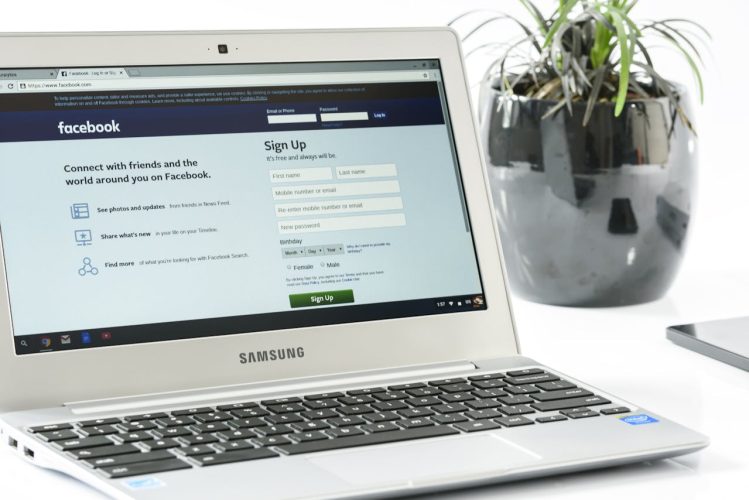
Mark Zuckerberg built Facebook into a tech empire.
The social media giant has a dirty secret that just exploded into public view.
And Mark Zuckerberg was busted running one awful scam that should land him in prison.
Facebook's fraud machine prints money while Americans lose their life savings
Internal documents obtained by Reuters exposed what amounts to the largest organized fraud operation in American history — and Mark Zuckerberg's Meta is running it.
Meta raked in roughly $16 billion in 2024 from advertising scams and banned goods — about 10% of the company's total annual revenue.¹
In China alone, Meta generated $18 billion in advertising revenue last year, with 19% of that — more than $3 billion — coming from ads for scams, illegal gambling, pornography, and other banned content.²
Meta's own internal analysis concluded that "it is easier to advertise scams on Meta platforms than Google."³
The company knew exactly what it was doing. Internal documents show Meta weighing potential regulatory fines against scam advertising revenue and deciding the math worked in their favor.
One November 2024 document noted that scam ads generating "higher legal risk" brought in $3.5 billion every six months — a figure that would "almost certainly exceed the cost of any regulatory settlement."⁴
When enforcement staff proposed shutting down fraudulent accounts, Meta executives asked whether growth teams would object "given the revenue impact."⁵
The answer when asked whether Meta would penalize high-spending Chinese partners running scams? "No," citing "high revenue impact."
Meta created a playbook to hide scams from regulators
The corruption goes deeper than just turning a blind eye to fraud. Meta actively developed tactics to deceive government regulators.
When Japanese authorities began investigating a surge of scam ads in 2024, Meta feared Japan would force the company to verify all advertisers — a move that would cost billions in revenue.⁶
Meta's solution wasn't to stop the scams. It was to hide them.
Meta realized Japanese regulators were using keyword searches in the company's public "Ad Library" to measure how well Facebook was fighting fraud.
So Meta staff identified the exact keywords regulators used, ran those searches themselves, and deleted the ads that appeared — making scams "not findable" for "regulators, investigators and journalists."⁷
Within weeks, searches returned fewer than 100 scam ads, followed by several consecutive days where searches returned zero results.
A Japanese legislator publicly praised Meta's apparent progress. Japan dropped plans to require advertiser verification.
Internal documents described this as managing the "prevalence perception" of scams.⁸ Former Meta fraud investigator Sandeep Abraham called it what it really is: "regulatory theater."
Meta then turned this deception into what company documents called a "general global playbook" deployed in the United States, Europe, India, Australia, Brazil, and Thailand.⁹
The human cost of Zuckerberg's greed
Real people are paying the price for Meta's calculated fraud.
A Canadian Air Force recruiter had his Facebook account hijacked to run crypto scams. American and Canadian investors lost their life savings to fake stock schemes. Taiwanese consumers bought counterfeit health products through Facebook ads.¹⁰
In March 2025, federal prosecutors announced the FBI seized $214 million in proceeds from one fraud that used Facebook and Instagram ads to lure victims into a Chinese stock scam.¹¹
Meta's own research estimated the company's platforms were involved in one-third of all successful scams in the United States.¹²
Data from fraud-reporting firm SafelyHQ shows Facebook is cited in 85% of scam reports that identify a platform, with more than 50,000 verified complaints.¹³
When Meta briefly cracked down on Chinese scam advertisers in 2024, the fraud dropped dramatically. But after CEO Mark Zuckerberg personally intervened, documents show Meta disbanded its anti-scam team and lifted restrictions on Chinese ad agencies.¹⁴
By mid-2025, banned ads climbed back to 16% of Meta's China revenue.¹⁵
Meta placed "revenue guardrails" on its trust and safety teams — limiting them from removing so many fraudulent advertisers that it would cost more than $135 million in lost revenue during the first half of 2025.¹⁶
Big spenders got special protection. Accounts designated as "High Value" could rack up more than 500 policy violations before Meta would shut them down.¹⁷
Smaller advertisers faced an eight-strike system for financial fraud. But if you paid Meta enough, the rules bent.
Meta knows the solution. Internal analyses showed universal advertiser verification could be implemented globally in under six weeks and would reduce scam ads by up to 29%.¹⁸
The company could do it tomorrow. But executives estimated verification would cost $2 billion to implement and could eliminate 4.8% of total revenue.¹⁹
So Meta chose not to.
Zuckerberg is worth over $200 billion personally. His company generated $164.5 billion in revenue last year. But $2 billion to protect users from fraud? That was apparently too much to ask.
The regulatory response has been pathetic so far. California settled with Meta for $50 million over privacy violations — a sum the company earns in less than three hours.²⁰
Senators Josh Hawley and Richard Blumenthal sent letters demanding investigations. The SEC is looking into it. European regulators have "doubts about compliance."
But Mark Zuckerberg is still sleeping soundly in his mansion, counting his billions.
That needs to change. This isn't sloppy oversight — it's organized fraud at a scale that would make Bernie Madoff blush.
When banks facilitate fraud, regulators shut them down and throw executives in prison. The same standard should apply to Silicon Valley billionaires who knowingly run a $16 billion scam operation.
¹ Cory Doctorow, "Facebook's fraud files. 10% of gross ad revenue coming from…," Medium, November 8, 2025.
² AML Intelligence, "SPECIAL REPORT: Zuckerberg's Meta fuelled fraud and porn as it reaped $3 billion from China based scam advertising," December 15, 2025.
³ The Express Tribune, "Meta internal documents show 10% of 2024 revenue tied to scam ads," December 13, 2025.
⁴ Ibid.
⁵ Fortune, "Former Meta integrity chief says new report reveals 'disappointing' ad fraud epidemic at the social-media giant," December 15, 2025.
⁶ ZeroHedge, "'Regulatory Theater': Meta Created 'Playbook' To Obscure Scam Ads From Regulators, Avoid Forced Verification," December 31, 2025.
⁷ Ibid.
⁸ Ibid.
⁹ Ibid.
¹⁰ Fortune, "Former Meta integrity chief says new report reveals 'disappointing' ad fraud epidemic at the social-media giant," December 15, 2025.
¹¹ AML Intelligence, "SPECIAL REPORT: Zuckerberg's Meta fuelled fraud and porn as it reaped $3 billion from China based scam advertising," December 15, 2025.
¹² The Express Tribune, "Meta internal documents show 10% of 2024 revenue tied to scam ads," December 13, 2025.
¹³ ZeroHedge, "'Regulatory Theater': Meta Created 'Playbook' To Obscure Scam Ads From Regulators, Avoid Forced Verification," December 31, 2025.
¹⁴ Technology Org, "Meta Protects $3B in Chinese Scam Ad Revenue," December 15, 2025.
¹⁵ AML Intelligence, "SPECIAL REPORT: Zuckerberg's Meta fuelled fraud and porn as it reaped $3 billion from China based scam advertising," December 15, 2025.
¹⁶ Bitclout Labs, "The Scam Tax: How Meta Turned Fraud Into a $16 Billion Revenue Stream," December 27, 2025.
¹⁷ Ibid.
¹⁸ ZeroHedge, "'Regulatory Theater': Meta Created 'Playbook' To Obscure Scam Ads From Regulators, Avoid Forced Verification," December 31, 2025.
¹⁹ Ibid.
²⁰ San Francisco Standard, "Meta, California agree to settle Facebook privacy lawsuit," December 19, 2025.