




Frank Thompson raced his daughter-in-law to the hospital and the government recorded every mile.
Now the Supreme Court has ruled that tracking him around the clock is completely constitutional.
What the government just got away with affects every farmer, trucker, and licensed worker in America.
How a Fishing License Became a Warrantless GPS Tracking Waiver
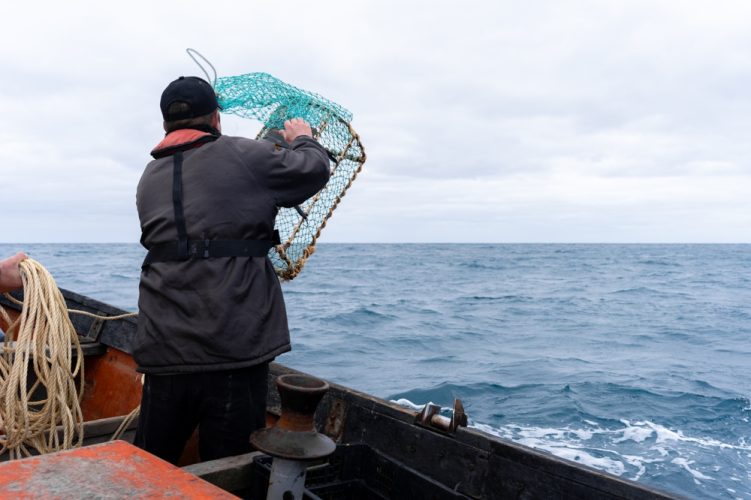
Frank Thompson is a fifth-generation lobsterman from Vinalhaven, a small island off the coast of Maine.
His family has worked these waters for generations.
In 2023, the Atlantic States Marine Fisheries Commission imposed a mandate requiring every federally licensed lobster vessel to install a GPS tracker that pings the government at least once per minute.
Biden's NOAA Fisheries backed the rule and provided states with permit data to make sure no lobsterman slipped through.
Atlantic States American Lobster Management Board Chair Dan McKiernan – the bureaucrat who championed the mandate – called it "the single most important thing the American Lobster Board can do to ensure the viability of the American lobster fishery."
His top priority wasn't protecting the industry from foreign competition or cutting the cost of doing business, it was tracking fishermen.
The device doesn't turn off when Thompson clocks out.
It runs while his boat is docked, while he's on a family picnic, while he's racing a daughter-in-law in labor across the bay to the mainland – every move, every mile, every moment.
Thompson called it exactly what it is: a government-issued "ankle bracelet."
Thompson has never been charged with a crime, he just has a fishing license.
And under the government's logic, that fishing license is now a waiver of his Fourth Amendment rights.
Thompson filed a federal lawsuit in 2023.
A district judge dismissed the case in 2024, ruling that lobstering is a "closely regulated industry" and therefore qualifies for an exception to the Fourth Amendment's warrant requirement.
The First Circuit Court of Appeals upheld that ruling in November 2025.
On October 5, the Supreme Court declined to hear his appeal.
The government won.
https://twitter.com/foxnewspolitics/status/2109207889563025612
The Fourth Amendment Loophole That Strips Your Rights the More You're Regulated
The legal trap Thompson fell into is one Washington set for every working American.
The Supreme Court has long recognized a narrow exception to Fourth Amendment protections for "closely regulated" industries – originally intended to cover only four with centuries of government oversight: liquor sales, firearms dealing, mining, and operating an automobile junkyard.
Lower courts have spent decades expanding that exception to cover virtually every licensed profession in America – ride-share drivers, goat cheese producers, charter fishing vessels.
The Pacific Legal Foundation, which represented Thompson, put the perverse logic plainly: the more the government regulates your industry, the fewer constitutional rights you retain as a condition of working in it.
Washington regulates your profession, then uses that regulation as proof you surrendered your privacy rights – and courts have let it stand for years.
Matthew Gilliam, Thompson's attorney at Pacific Legal Foundation, called the mandate a warrantless government intrusion onto private property with no probable cause, no court order, and no criminal suspicion of any kind.
"Lobstermen and others have Fourth Amendment protections and we'll continue fighting against government overreach," Gilliam said after SCOTUS denied the petition.
The American Farm Bureau Federation – which represents millions of farmers and ranchers across the country – filed an amicus brief supporting Thompson's appeal, warning that the First Circuit's reasoning could justify GPS trackers on tractors and surveillance devices on farm equipment across every federally regulated field in America.
In 2023, the Fifth Circuit struck down a nearly identical GPS tracking requirement for charter fishing vessels in the Gulf of Mexico, ruling it likely violated the Fourth Amendment – a direct conflict with what just happened to Thompson, and the Supreme Court walked away from resolving it.
Commercial fishers in Washington state are fighting an identical mandate right now.
The Government Surveillance Blueprint That Now Threatens Every Licensed Worker in America
Every licensed professional in America holds a government-issued credential – every plumber, contractor, trucker, farmer, and fisherman.
If the government can use that license as evidence you've surrendered your Fourth Amendment rights, they can track all of them – and the precedent to do it already exists.
Maine DMR Commissioner Carl Wilson called the tracking "critically important to the long-term sustainability of the lobster fishery."
Carl Wilson enforces the rule in Maine and has never had to choose between his livelihood and his constitutional rights.
That's the justification: fish populations.
The government is treating a fifth-generation lobsterman like a parolee so Carl Wilson and Dan McKiernan can generate better spreadsheets.
Thompson told Fox News Digital he hasn't given up.
"I'm fighting for everybody, not just myself," he said. "I'm just fighting for freedom for everybody."
If the government can track a man’s boat whose family has fished Maine waters for generations just for holding a fishing license, the Iowa farmer who grows federally regulated grain is next – and so is the long-haul trucker, and the contractor who ever pulled a permit from a city building department.
Frank Thompson lost at SCOTUS.
Biden's regulatory machine built and tested this doctrine over four years — and every federal agency in Washington now knows it holds up in court.
And it's coming for every licensed American if nobody stops it.
Sources:
- Kiera McDonald and Andrew Mark Miller, "How a Lobsterman's Privacy Fight Reached SCOTUS," Fox News, October 11, 2026.
- Pacific Legal Foundation, "Active: Petition for Certiorari Filed to Challenge Unconstitutional GPS Surveillance," pacificlegal.org, March 19, 2026.
- American Farm Bureau Federation, "Brief of the American Farm Bureau Federation as Amicus Curiae in Support of Petitioner," Supreme Court of the United States, No. 25-1105, 2026.