




Big Tech sold law enforcement a machine that gets people arrested.
Angela Lipps found out what happens when nobody questions the machine.
She lost 164 days of her life, her house, her car, and her dog – because a computer said so.
How Facial Recognition Technology Put Angela Lipps in Handcuffs
Between April and May 2025, someone walked into Fargo-area banks using a fake U.S. Army military ID and walked out with tens of thousands of dollars.
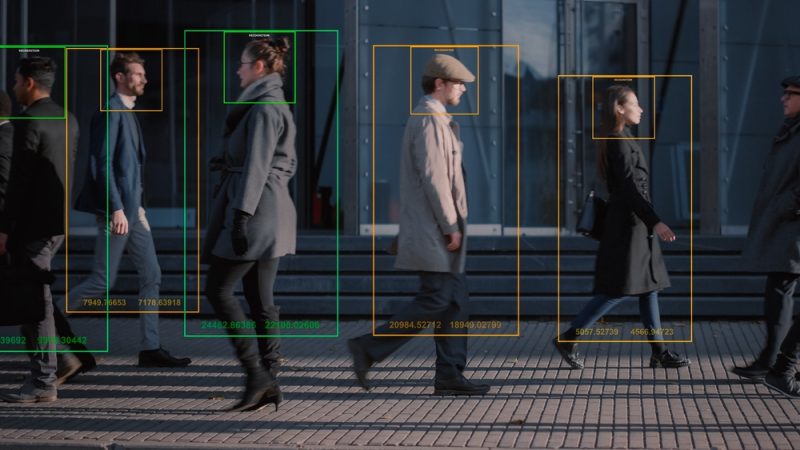
Detectives pulled the surveillance footage and fed it into facial recognition software.
The software – built by a private tech company, licensed to law enforcement, marketed as a crimefighting breakthrough – returned a name: Angela Lipps of Elizabethton, Tennessee.
A detective looked at Lipps' social media and her Tennessee driver's license photo and wrote in court documents that she appeared to match based on facial features, body type, and hairstyle.
That was the entire investigation.
Nobody called Lipps.
Nobody checked whether she had ever been to North Dakota.
Nobody asked if she owned a military ID.
Nobody verified a single thing.
On July 14, 2025, a team of U.S. Marshals showed up at her home – guns drawn – while she was babysitting four children.
She was booked as a fugitive from justice and held without bail.
For 108 days, she sat in a Tennessee county jail while Fargo police did not arrange her transport to North Dakota.
"I've never been to North Dakota. I don't know anyone from North Dakota," she told WDAY News.
North Dakota officers finally picked her up October 30.
Her first court appearance was October 31.
Her first conversation with Fargo police came December 19 – five months after her arrest.
It was also the day her attorney Jay Greenwood put her bank records in front of them.
Those records showed Lipps buying cigarettes at a Tennessee gas station, depositing Social Security checks, ordering Uber Eats – all at the exact times Fargo police claimed she was committing fraud more than 1,200 miles away.
Five days later, the case was dismissed.
"If the only thing you have is facial recognition, I might want to dig a little deeper," Greenwood said.
Big Tech Sold Police a Facial Recognition Product and an Innocent Grandmother Paid the Price
This is how the pitch works.
A private tech company builds a facial recognition system, licenses it to police departments across the country, and promises it solves crimes faster than traditional detective work.
Departments buy in – because the software is fast, because it looks impressive, and because no chief wants to turn down a crimefighting tool.
What they don't tell you: a facial recognition algorithm with a 0.1% error rate on clean mugshots hits a 9.3% error rate on blurry surveillance footage – the kind police actually work with.
What they really don't tell you: an independent review of London's Metropolitan Police found that out of 42 facial recognition matches, only eight could be confirmed accurate.
The machine was wrong more than 80% of the time, and officers acted on it anyway.
Lipps is at least the ninth American wrongfully arrested because police handed their judgment over to a tech company's product and stopped asking questions.
The first was Robert Williams of Detroit – arrested in January 2020 after grainy store footage was run through facial recognition and matched to an expired driver's license photo.
Williams put it plainly after his arrest: "Once the facial recognition software told them I was the suspect, it poisoned the investigation."
That's the product Big Tech is selling – software so convincing that the detective stops being a detective and becomes a delivery driver for whatever the machine produces.
Detroit eventually paid Williams $300,000 and now requires independent corroborating evidence before any facial recognition match can support an arrest warrant.
Fargo had no such policy.
North Dakota has no state law regulating how police can use this technology.
Neither do 35 other states.
Angela Lipps Lost Everything After a Wrongful Arrest No One Has Apologized For
When their software flags the wrong person, the tech company doesn't go to jail.
The police department doesn't go to jail.
Angela Lipps goes to jail.
While she sat in a cell unable to pay her bills, she lost her home.
Her car was gone too.
And when she finally got out, her dog was gone.
When Fargo police released her on Christmas Eve, they didn't arrange her ride home.
She stood outside in summer clothes in a North Dakota winter – no coat, no phone, no money.
Local defense attorneys paid for her hotel room and food over Christmas.
A local nonprofit drove her to Chicago so she could get back to Tennessee.
The Fargo Police Department has not apologized.
The tech company that built the software that put her there faces no consequences whatsoever.
This is what happens when a Silicon Valley company sells government a shortcut, cashes the contract check, and disappears when the shortcut destroys the wrong person's life.
Police work should be done by police.
Not by a tech company that made a fortune off a government contract and has never spent a single day in a jail cell for getting it wrong.
Angela Lipps has.
Sources:
- InForum / WDAY News, "AI error jails innocent grandmother for months in Fargo fraud case," InForum, March 2026.
- Valley News Live, "Attorney outlines potential lawsuit plans after AI led to wrongful arrest of Tennessee grandmother," Valley News Live, March 19, 2026.
- News Channel 9, "Tennessee grandma mistakenly sent to North Dakota jail due to AI error, attorney says," WCYB, March 2026.
- Tom's Hardware, "Tennessee grandmother wrongly jailed for six months, latest victim of AI-driven misidentification," Tom's Hardware, March 2026.
- Washington Post, "Arrested by AI: Police ignore standards after facial recognition matches," The Washington Post, January 2025.
- TechPolicy.Press, "Why We Shouldn't Trust Facial Recognition's Glowing Test Scores," TechPolicy.Press, August 2025.