



Americans thought they could at least buy groceries without Big Brother watching.
That illusion just shattered.
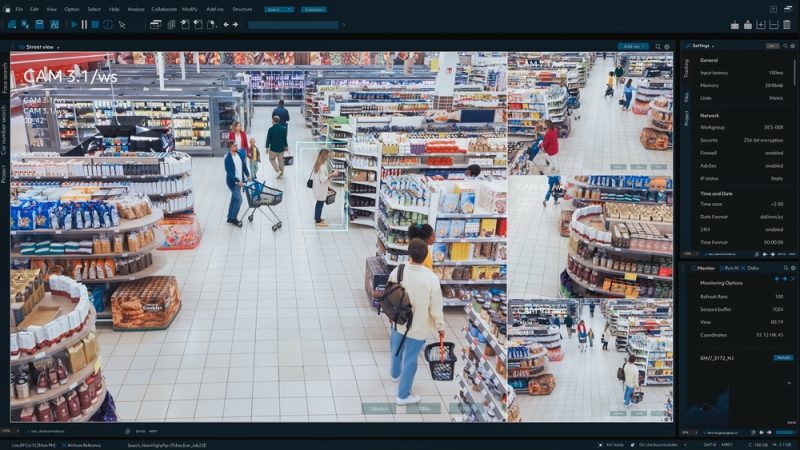
And grocery store shoppers are being subjected to this creepy surveillance scheme that will make your blood run cold.
Wegmans just broke its promise to shoppers about how far the surveillance would go.
The Rochester-based grocery chain rolled out biometric data collection across its New York City stores this month after running what it called a limited 2024 pilot program.
Back then, Wegmans swore the scanning targeted only a handful of employees and vowed to delete shopper data from the test.
Those promises vanished the moment the program went live.
New signs posted at Wegmans' Manhattan and Brooklyn locations spell it out: the chain now collects facial geometry, eye scans, and voice prints from anyone who walks through the door.
No consent required. No opt-out available. No deletion guaranteed.
Wegmans won't say who gets access to your biometric data
Wegmans refuses to answer basic questions about data storage, access rights, or law enforcement sharing.
The company went silent when reporters asked.
Unlike a password or credit card number, you can't change your face.
Once captured and stored, your biometric data is permanent.
When hackers breach these databases — and they will — criminals have your facial geometry forever.
When government agencies come calling with warrants or friendly requests, your biometric profile sits ready for access.
You're being tracked and catalogued for buying milk and eggs.
Shopper Johnny Jerido said he's done with Wegmans.
"I really don't like it," Jerido explained. "I don't want no one to think I'm stealing anything or doing anything illegal."¹
Wegmans isn't alone in turning grocery stores into surveillance zones.
Kroger built a billion-dollar business selling your shopping data
While Wegmans watches your face, Kroger has been monetizing your shopping habits for years.
The grocery giant tracks 63 million loyalty program members and sells that intelligence through its "precision marketing" division run by subsidiary 84.51°.²
Consumer Reports discovered Kroger uses an "income predictor" algorithm to guess how much money you make based on what you buy.²
The predictions are often dead wrong, but Kroger uses them anyway to determine which customers get the best discounts.
Translation: if Kroger's algorithm thinks you're poor, you pay more for groceries.
Kroger shared one customer's data with more than 50 companies ranging from data brokers to tobacco firms to healthcare tech companies.²
That customer obtained his 62-page Kroger profile through Oregon's privacy law and found nearly every detail — gender, education level, income — was completely inaccurate.²
Kroger's "alternative profit" business from selling customer data now represents more than 35% of the company's net income.²
The precision marketing division alone is projected to hit $825 million in profits by 2027.²
Your shopping data is so valuable that selling it generates more than a third of Kroger's profits.
Private companies will pay top dollar for it. Government agencies want it too.
Walmart and Target tested facial recognition but won't confirm current practices
Walmart admitted testing facial recognition software in stores back in 2015, then claimed it discontinued the practice because it lacked "return on investment."³
But when asked whether they're using facial recognition now, Walmart refused to answer.³
The retail giant's privacy policy reserves the right to collect "biometric information" including "voice prints, imagery of the iris or retina, face geometry, and palm prints or fingerprints."⁴
Walmart also tracks "purchase and transaction history," "login information, MAC address, IP address, cookie IDs, mobile ad IDs," and "inferences drawn from shopping patterns and behaviors."⁴
Target tested facial recognition cameras at some stores and posted signs during the pilot.
The company said the test concluded but refuses to say whether they're using the technology now.³
Target's online privacy policy still notes that some store cameras "may use biometrics, including facial recognition for fraud and theft prevention."³
These companies won't tell you if they're scanning your face right now because they consider it "proprietary information."
You walk into their store, they scan your biometrics without permission, and they won't even confirm whether they're doing it.
Your privacy matters less than their marketing strategy.
Washington does nothing while corporations build surveillance infrastructure
New York City technically requires businesses collecting biometric data to post signs notifying customers.
The Department of Consumer and Worker Protection has zero enforcement mechanism for companies that ignore the law.¹
Customers who believe their rights were violated have to file lawsuits on their own dime.
A 2023 City Council bill aimed at restricting biometric surveillance has gone nowhere.¹
The bill was introduced after Madison Square Garden CEO James Dolan used facial recognition to identify and boot attorneys whose law firms had litigation against his company.¹
Even that blatant abuse wasn't enough to move politicians to protect privacy rights.
Washington, D.C. sits on its hands while the surveillance state gets built one grocery store at a time.
Once Wegmans has your facial geometry, once Kroger knows your shopping patterns going back 18 years, once Walmart captures your voice print — that data lives in corporate servers indefinitely.
When government agencies come knocking with National Security Letters or broad warrants, all that data they swore was just for "security purposes" becomes searchable evidence about where you've been and what you've bought.
Private corporations are building the infrastructure for tracking every American's movements right now.
You're not a customer anymore — you're a data point being catalogued, analyzed, and sold.
And there's not a damn thing you can do about it except shop somewhere else — if you can find a store that isn't already watching.
¹ Liam Quigley, "NYC Wegmans is storing biometric data on shoppers' eyes, voices and faces," Gothamist, January 3, 2026.
² "Consumer Reports investigation uncovers Kroger's widespread data collection of loyalty program members to create secret shopper profiles," Consumer Reports, May 21, 2025.
³ "Are Stores You Shop at Secretly Using Face Recognition on You?" American Civil Liberties Union, June 27, 2024.
⁴ "Walmart Customer Privacy Notice (Online and In-Store)," Walmart, December 20, 2025.